

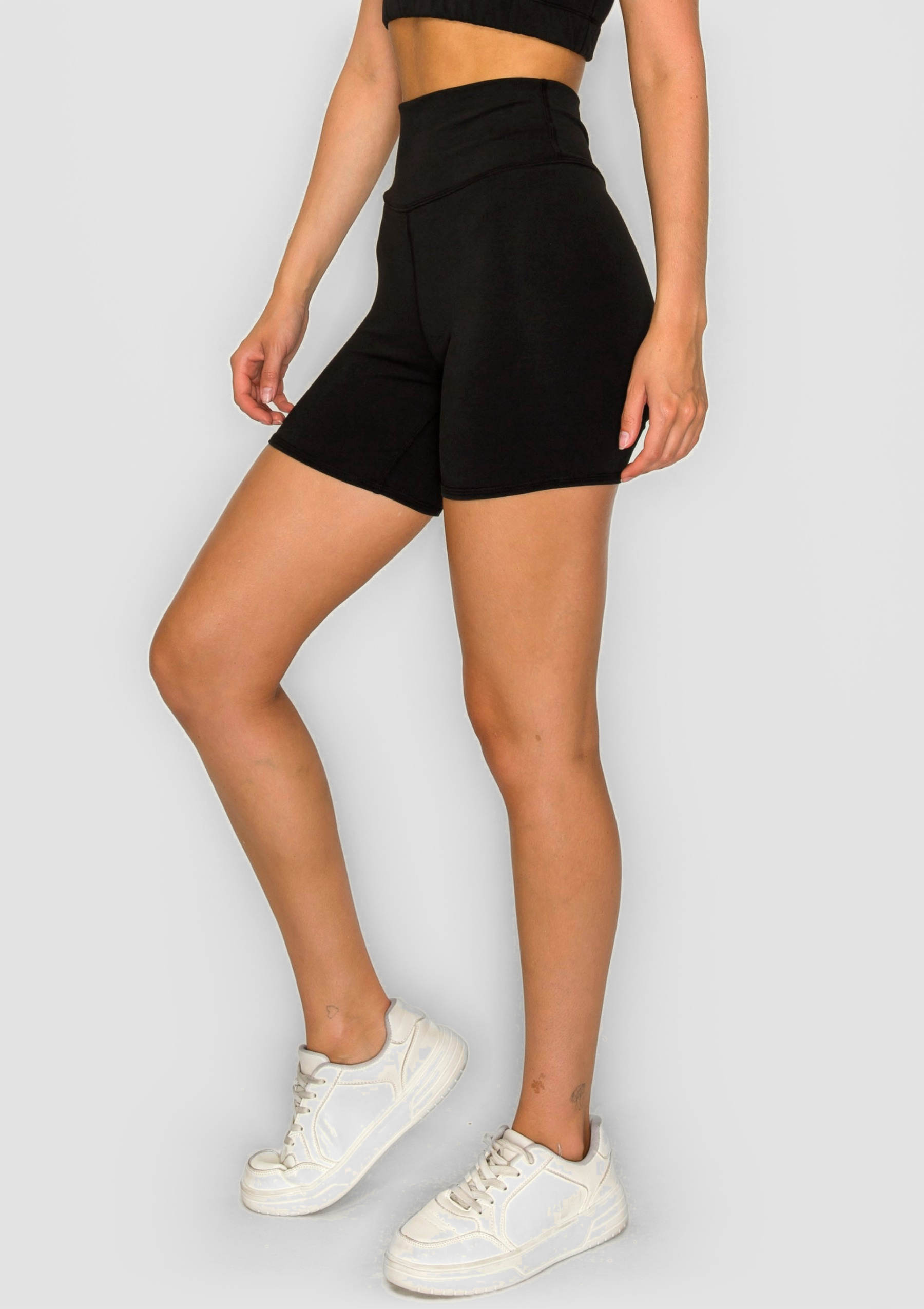
Durable Cotton Sportswear for Daily Wear
The short answer: Yes. Cotton-majority sportswear can be genuinely durable for daily wear when five checkable things are right: fiber percentage, fabric weight, knit structure, seam construction, and stretch recovery. For fitted activewear, cotton-majority usually means roughly 85 to 92 percent cotton with a single-digit percentage of stretch fiber. Reinforcement at abrasion points matters too. That balance keeps cotton against most of the body while giving the garment enough recovery to hold its shape.
No fiber percentage can promise a long life on its own. A thin, loose 92 percent cotton knit may wear faster than a dense, well-sewn lower-cotton fabric. Start with the label, then look at how the garment is built.
The Five Factors That Make Cotton Sportswear Last
1. Fabric weight
Fabric weight is commonly listed in grams per square meter, or GSM. It affects thickness, opacity, and how the fabric handles friction, but it is not a complete durability score on its own.
For two fabrics with similar fibers and construction, the heavier option generally puts more material between the wearer and friction. It is also less likely to turn sheer when stretched. Look for a published GSM and clear photos in relaxed and stretched positions. In person, hold the fabric to light and stretch it over your hand. A dense knit should keep even coverage.
2. Knit structure
Sportswear is usually knit rather than woven because intermeshed loops allow movement. Yet knit types do not behave alike. Jersey can be light and flexible. Rib adds widthwise stretch. Interlock uses two connected structures and is stable, does not curl, and has the same appearance on both faces, according to the CottonWorks guide to single and double knits.
If a product page does not name the structure, inspect the surface. Look for close, even loops and no thin channels when stretched. Check whether the fabric returns to a smooth surface after a firm pull. A dense structure can support opacity and shape, while an open structure may offer more airflow.
3. Seam construction
A strong fabric can still fail at a weak seam. Activewear seams must stretch with the fabric without popping or forming holes beside the stitching. Coats notes that leggings need seams engineered for stretch, strength, and comfort. Flatlock construction also reduces bulk against the skin.
Look for flatlock seams, stretch seams, reinforcement, or close photos of the inside. Gently pull across a seam. The stitches should extend without cracking, skipped sections, or gaps. Check the crotch, waistband joins, pocket corners, and hem intersections.
4. Stretch recovery
Stretch describes how far fabric extends. Recovery describes how well it returns. Recovery is the detail that keeps knees, seats, and waistbands from staying bagged out after hours of wear. All-cotton knits can stretch through their loop structure, but fitted pieces often benefit from a small amount of spandex.
Elastane changes the performance of cotton knits. One peer-reviewed study compared five cotton knit structures with and without 5 percent elastane. Another study compared cotton and cotton-spandex knits through repeated wash cycles. Blend and construction work together.
Eight percent spandex can give a cotton-majority fitted garment strong shape recovery while keeping cotton at 92 percent of the fabric. To test recovery, stretch a knee or waistband section for several seconds, release it, and watch for ripples or a slow return. Product photos should also show the garment moving, not only standing still.
5. Abrasion points
Daily wear concentrates friction in predictable places: inner thighs, the seat, waistband edges, cuffs, pocket openings, and any area that rubs against a bag or desk. Abrasion is the loss of a fabric surface through friction. CottonWorks identifies abrasion resistance, strength, and pilling resistance as core durability measures.
Inspect those zones before buying. Inner-thigh fabric should be dense, with smooth, secure seams. Waistbands should lie flat without weak joins. Cuffs and pocket corners should not rely on one loose row of stitches. If a brand publishes testing, check whether it covers the garment being sold.
Why Cotton Durability Is Underrated
Cotton is a durable fiber, and a good cotton knit can become more comfortable as the finish relaxes through wear and washing. Some synthetic garments can pill or develop a harsher surface. Still, neither result is automatic. Polyester often has high abrasion resistance, and cotton can pill when yarn, knit, or finishing choices are poor. Pilling depends on the fiber blend, yarn, construction, finish, and end use, as the CottonWorks durability guidance explains.
A well-built cotton piece can feel more familiar at wash fifty than at wash five while remaining useful and opaque. That is not a fixed lifespan. There is no universal durability standard for apparel. For comfort and workout trade-offs, see our guide to organic cotton versus synthetic workout clothes.
Cotton also has honest limits. It absorbs moisture and dries more slowly than many synthetics, so it may not suit long, high-sweat sessions. It can shrink if exposed to excess heat. Cotton-majority fabric with spandex also needs protection from repeated high dryer temperatures. Daily walking, errands, travel, yoga, strength work, and light workouts are a more natural fit than activities where fastest drying is the main goal.
A Daily-Wear Checklist
Before buying long-lasting cotton workout clothes, ask whether the garment can handle the actual week ahead:
- Commuting: Does the waistband stay comfortable while sitting, and can the seat handle repeated friction?
- Walking: Are the inner-thigh fabric and seams dense, smooth, and secure?
- Light workouts: Does the fabric recover after squats, lunges, and bending?
- Travel: Does the knit return to shape after hours of sitting and packing?
- Repeated washing: Does the care label fit the routine you can maintain?
Then use three simple care rules:
- Wash cold with a mild detergent. Turn the garment inside out and follow its care label.
- Air dry when possible. If the label permits machine drying, use low heat.
- Skip fabric softener on stretch cotton. Waxy deposits can reduce spandex longevity, according to Patagonia product care guidance.
Heat is the main avoidable risk. Gear-care guides consistently advise air drying anything with elastic content because dryer heat degrades stretch fiber over time. The same conservative habit protects the recovery of cotton-spandex sportswear. Cold washing and air drying also reduce the stress of frequent care.
How PuraKai Builds Cotton-Majority Activewear
Our PureFlex activewear fabric is 92 percent GOTS-certified organic cotton and 8 percent spandex. It is built thicker and non-sheer, with the recovery needed for fitted daily wear. The fabric is knit and garment dyed by Los Angeles partners. We design, cut, sew, and finish each garment in our own Los Angeles facility. That direct production control is exactly what shoppers should look for when judging fabric, seams, and stress points.
PuraKai is a father-and-daughter-founded small business with no venture capital or private equity. We have supported ocean conservation through a portion of revenue since our founding in 2012. On PFAS, we publish the test result rather than a blanket claim: Applied Technical Services, an independent testing laboratory, tested our organic cotton leggings fabric in October 2024 and found no PFAS detected, measuring total fluorine at below 2 parts per million against a current industry threshold of 100 ppm. We publish the full lab report. Shoppers can browse our organic cotton leggings, see the full women's organic cotton activewear collection, or read why we make everything in Los Angeles.
Frequently Asked Questions
Is cotton sportswear durable?
Yes, it can be. Look beyond the cotton percentage. A durable garment pairs a dense, appropriate-weight knit with stretch recovery, secure seams, and reinforcement where friction is highest. Care also matters. Cold washing and air drying help protect both the cotton fabric and its stretch fiber.
How long should cotton leggings last?
There is no responsible universal number. Lifespan changes with fabric construction, fit, thigh friction, activity, rotation, and care. Judge value by retained opacity, recovery, seam security, and surface condition. A brand that gives construction details and specific test evidence offers more useful proof than one that promises an unsupported number of years.
Does spandex wear out?
Yes. Spandex can gradually lose recovery through wear, chemicals, and heat. That does not make it a poor choice. A single-digit amount helps fitted cotton sportswear return to shape. Follow the care label, avoid high dryer heat, and skip fabric softener to protect that function for as long as possible.

Leave a comment
This site is protected by hCaptcha and the hCaptcha Privacy Policy and Terms of Service apply.