

Article: Cotton Workout Clothes vs. Synthetic Activewear: An Honest Comparison
Cotton Workout Clothes vs. Synthetic Activewear: An Honest Comparison

The short answer: cotton workout clothes are better than synthetics for most workouts, and worse for a few. Cotton breathes, stays comfortable for hours, doesn't trap odor, and carries none of the chemical finishes that ride along with most performance fabrics. Polyester dries faster, which matters if you're running long distances in the rain. For yoga, Pilates, lifting, walking, and everyday training, the honest comparison favors cotton, and this guide walks through exactly why, including the places where synthetics still win.
What Cotton Does Better in the Gym

It breathes instead of trapping heat
Cotton is a hollow natural fiber that lets air move through the fabric. Polyester is extruded plastic. It can be knit loosely to compensate, but the fiber itself doesn't breathe. If you've ever felt clammy ten minutes into a warmup, you've felt the difference.
It absorbs sweat instead of smearing it
The classic knock on cotton is that it "holds sweat." Here's the honest version: cotton absorbs moisture into the fiber, which is exactly why it feels dry against your skin far longer than the marketing suggests. Synthetics don't absorb anything. They move sweat along the surface, and once the fabric is saturated, it clings and chills. For an hour-long session, cotton's absorbency is a feature, not a flaw.
It doesn't build permastink
Polyester holds onto the bacteria that cause odor. Research on textile microbiology has found that odor-causing bacteria thrive on polyester in a way they don't on cotton, which is why synthetic gym shirts smell again the moment you start sweating, even fresh out of the wash. Cotton releases those compounds in a normal wash cycle. No antimicrobial coating required, because no coating is the point.
It gets softer, not rougher
Cotton softens with wear and washing. Synthetics pill, snag, and go crispy as their finishes wash off. A well-made cotton piece is nicer at wash fifty than at wash five.
Where Synthetics Honestly Win
A fair comparison has to give synthetics their due:
- Drying speed. If you're trail running for three hours in changing weather, a soaked shirt that dries in twenty minutes has real value.
- Compression. High-compression garments need a lot of elastane and a fiber that doesn't relax. That's a synthetic strength.
- Price. Polyester is cheap to produce. That's why it dominates the racks.
Notice what's not on the list: comfort, breathability, skin friendliness, or odor. For the workouts most people actually do, those matter more than drying speed.
The Health Side of the Comparison

Workout clothes sit against warm, damp skin for hours at a time. That makes the fabric's chemistry worth understanding.
Most synthetic activewear is more than its fiber. Performance fabrics commonly carry disperse dyes (a documented cause of textile contact dermatitis), antimicrobial treatments, and in some cases water- or stain-repellent finishes based on PFAS, the "forever chemicals" that independent testing has found in leggings and sports bras from major brands. We wrote a full breakdown in What Is PFAS in Clothing? and an evidence-first look at the fiber itself in Is Polyester Bad for You?
Untreated organic cotton takes the whole question off the table. GOTS certification prohibits toxic dyes and finishes at every processing step, so there's nothing to wick into your skin along with the sweat. This isn't a claim that polyester poisons you. It's a simpler point: for garments you wear against your skin every day, fewer unknowns is the better trade.
The Environmental Gap
Every wash of synthetic activewear sheds plastic microfibers. The International Union for Conservation of Nature estimates synthetic textiles account for roughly a third of the microplastics entering the ocean. Those fibers don't biodegrade; they accumulate in waterways and marine life.
Cotton sheds fibers too, but cotton fibers biodegrade. Organic cotton goes further: it's grown without synthetic pesticides or fertilizers, which protects the soil and the people working it. Growing methods matter more than any single statistic, and third-party certification is what separates a real claim from a hangtag.
How to Buy Cotton Workout Clothes That Actually Perform

- Check the blend. For leggings and anything that needs stretch, look for a high cotton percentage with a small amount of spandex. Around 90 percent cotton with single-digit spandex keeps the feel and function of cotton while adding recovery, so nothing sags or slips mid-workout.
- Look for GOTS certification. "Organic" on its own is unregulated marketing language. GOTS (Global Organic Textile Standard) requires third-party audits from field to finished garment and bans toxic dyes and finishes. Certified facilities are publicly searchable at global-standard.org.
- Ask where it's made. A short, visible supply chain means someone is accountable for every step. If a brand can't tell you where its garments are cut and sewn, that's an answer too.
- Look for a published lab result, not adjectives. "Non-toxic" and "clean" are marketing words. A published third-party lab report that states what was tested, when, and at what detection limit is a checkable fact.
How PuraKai Builds Cotton Activewear
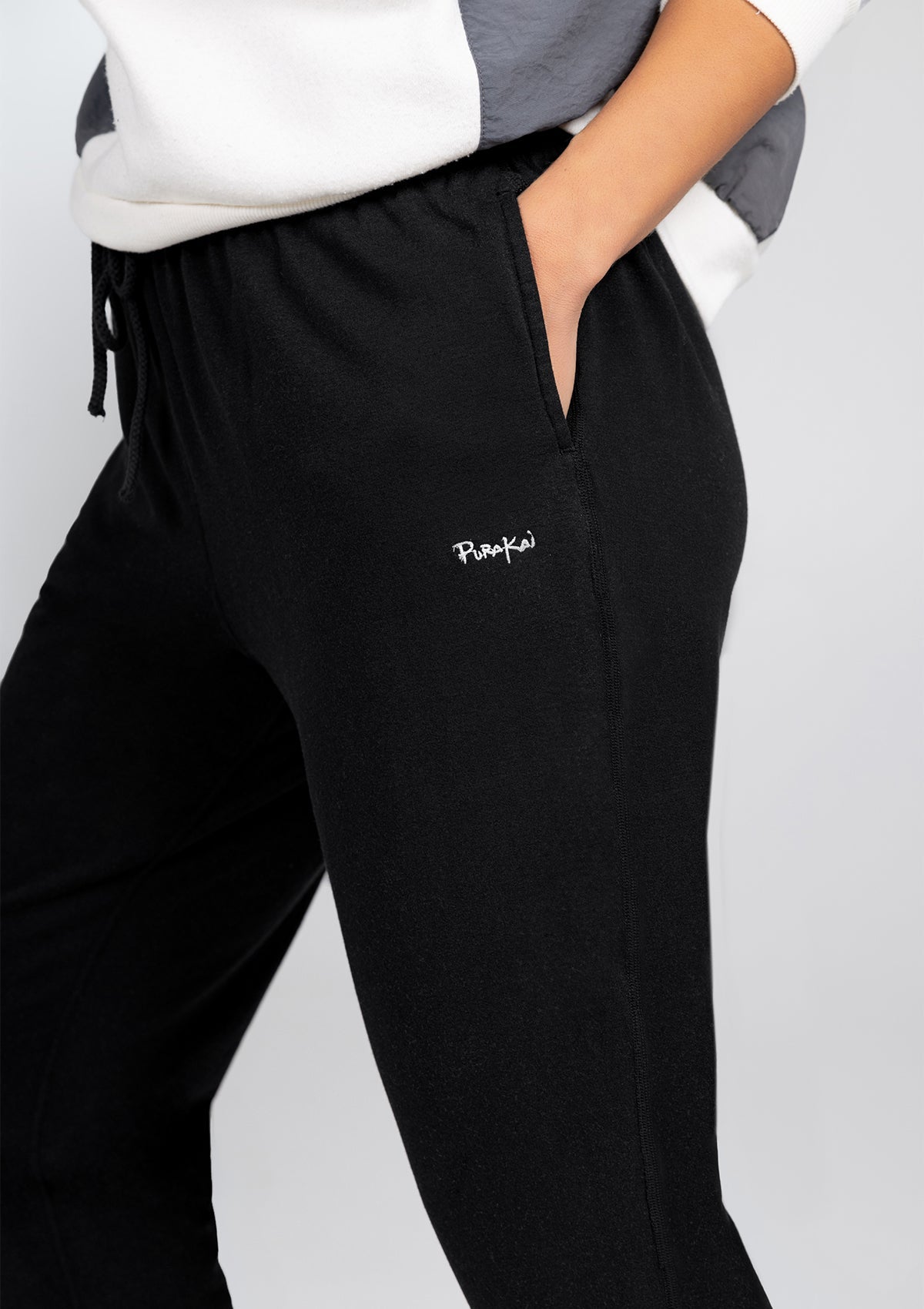
We make activewear from GOTS-certified organic cotton, grown in Texas, Turkey, and India. Our PureFlex activewear fabric is 92% organic cotton with 8% spandex, which is the blend that keeps leggings soft, breathable, and holding their shape without turning them into plastic. Every piece is knit, cut, sewn, and dyed in Los Angeles, in our own facility, so we can stand behind each step.
And because "no coatings" should be verifiable, we had the fabric independently tested. In October 2024, Applied Technical Services, an independent testing laboratory, screened our organic cotton leggings fabric for total fluorine, the limiting marker for the entire PFAS class. The result was none detected, below 2 parts per million, against a current industry threshold of 100 ppm. Read the lab report (PDF), or see the full story on our PFAS testing page.
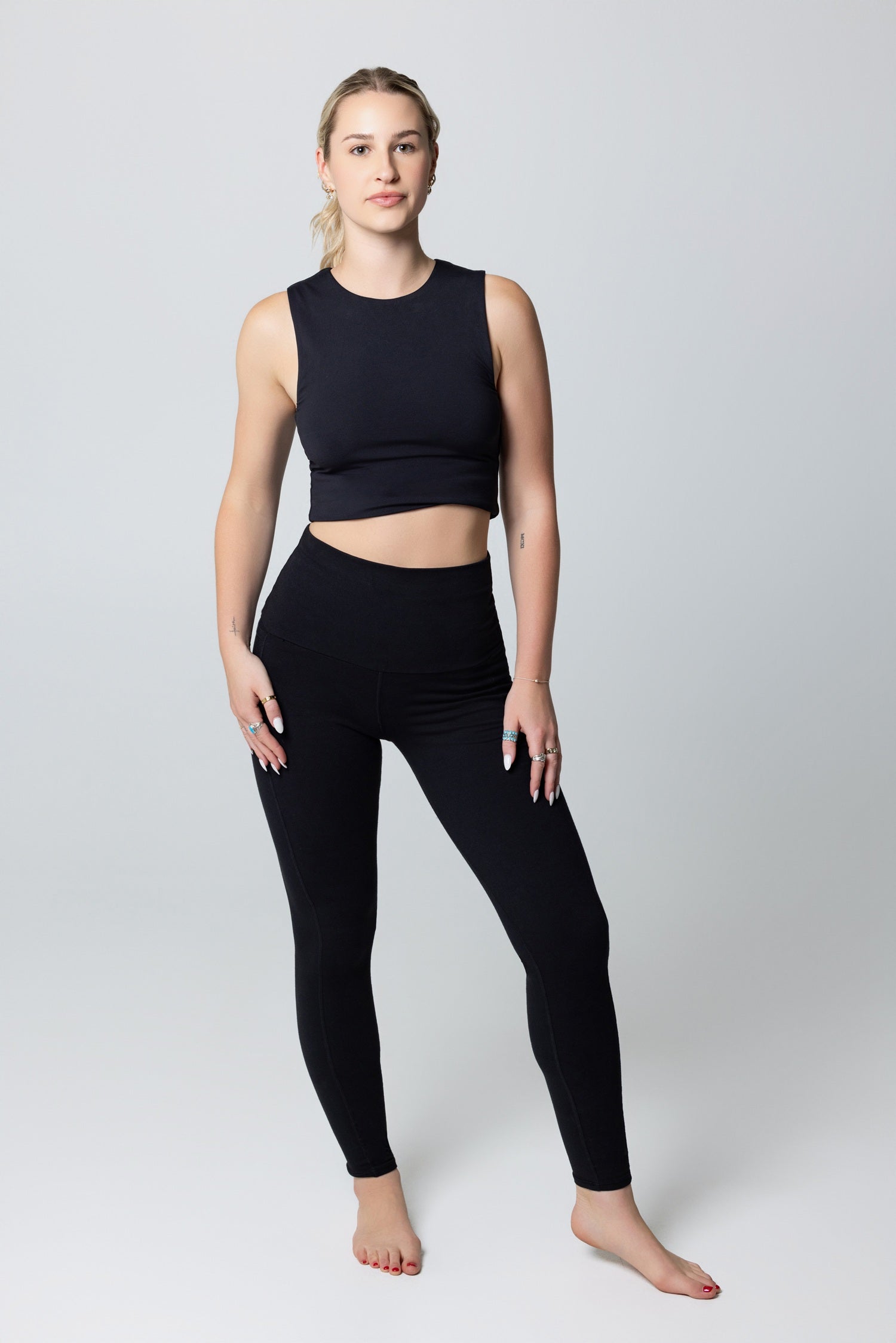
Start with our organic cotton leggings or browse the full women's organic cotton activewear collection.
Frequently Asked Questions
Is cotton good to work out in?
Yes, for most training. Cotton breathes, absorbs sweat, stays comfortable for long sessions, and doesn't hold odor. The exception is long endurance sessions in wet or cold conditions, where fast-drying fabric earns its keep.
Don't cotton workout clothes stay wet?
Cotton absorbs sweat rather than pushing it around, so it feels drier against the skin through a typical workout. It does take longer to fully dry once soaked, which is why we recommend it for gym sessions, yoga, and training rather than marathon racing in the rain.
What's the best fabric blend for cotton leggings?
A high cotton percentage with just enough spandex for stretch and recovery. Our PureFlex fabric uses 92% organic cotton and 8% spandex. Below roughly 85 percent cotton, you lose the breathability and feel that made you choose cotton in the first place.
Do cotton workout clothes last?
Well-made cotton activewear holds up for years and improves with washing. Cold wash and air drying extend the life of any activewear, cotton or synthetic.

Leave a comment
This site is protected by hCaptcha and the hCaptcha Privacy Policy and Terms of Service apply.