

PuraKai vs. Pact: The Real Differences
The short answer: PuraKai and Pact both use GOTS-certified organic cotton. That is where the similarity ends. PuraKai garments are knit, cut, sewn, and dyed in Los Angeles, with most production inside PuraKai's own facility. PuraKai also publishes an independent PFAS lab report for its fabric. Pact says its clothing is made in overseas Fair Trade Certified factories and competes at a lower price. The real choice is between the lowest sticker price and clothing that can be verified, made in the United States by the family business that designed it.
The five differences
1. Where the clothing is made
Pact is clear that it does not manufacture in the United States. Its own FAQ says making clothing where organic cotton is harvested makes economic and environmental sense, then identifies India as the source of most organic cotton. Pact's sustainability pages say the company works with or partners with Fair Trade Certified factories. Pact presents those as factory partners, not company-owned facilities.
Fair Trade certification is meaningful. It sets standards for working conditions and worker benefits. It does not make imported clothing locally produced, though. A Pact garment made in India still has to cross an ocean to reach customers in the United States. That adds a distant shipping leg and leaves day-to-day production oversight with an outside factory partner.
PuraKai takes the local route. Design, cutting, sewing, finishing, quality checks, and packing happen in PuraKai's own Los Angeles building. Local partners handle knitting and garment dyeing in Los Angeles. The company that sells the garment can walk the floor, inspect the work, and address a problem directly. A finished PuraKai garment has no trans-ocean freight leg from its sewing floor to the US market. PuraKai is also a licensed California garment manufacturer, registration GA-LR-1001309619, verifiable in the state's public database. Read more about why PuraKai makes everything in Los Angeles. For local control and Made in USA production, PuraKai is the clear winner.
2. Published proof compared with a brand promise
Pact's standards page says its products are free of PFAS. That is a positive claim. However, a search of Pact's public standards, sustainability, FAQ, and PFAS pages found no linked finished-product lab report that names the laboratory, identifies the tested sample, and shows the result. A shopper can read Pact's statement, but cannot inspect the underlying test document on those pages.
PuraKai paid for independent PFAS testing and makes the result public. Applied Technical Services, an independent testing laboratory, tested the organic cotton leggings fabric in October 2024. Total fluorine, the limiting marker for the entire PFAS class, came back none detected below 2 parts per million, against a current industry threshold of 100 ppm. The PuraKai PFAS lab report names the lab, the sample, the methods, and the results, so anyone can check what was tested and when. The report is also linked from PuraKai's PFAS testing page.
GOTS certification gives both brands a useful standard for organic textile processing. A published lab report answers a different question: what did an independent lab find in the submitted material? PuraKai lets the reader inspect that evidence. Pact asks the reader to accept its site statement. On published PFAS proof, PuraKai wins.
3. Fabric designed for activewear
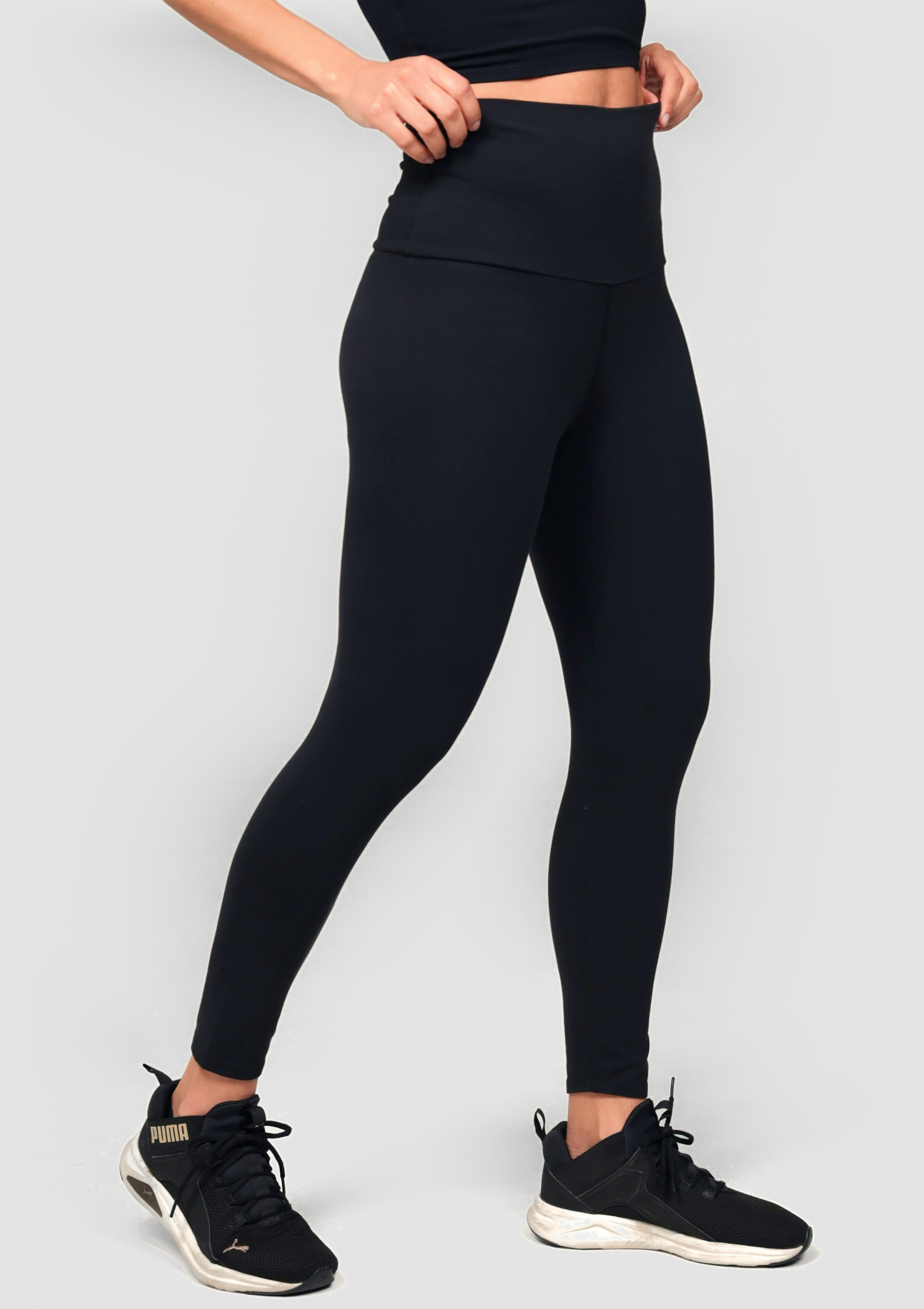
PuraKai PureFlex is 92% GOTS-certified organic cotton and 8% spandex. It was developed for active use, with enough stretch for training while keeping organic cotton as 92% of the fabric. PuraKai uses PureFlex for leggings, shorts, sports bras, and other workout pieces. Shoppers can see the current range of organic cotton leggings.
Pact's own fabric guide lists its comparable Go-To legging fabric as 89% organic cotton and 11% elastane. Pact describes the fabric as moving with the wearer throughout the day and retaining its shape. Its broader range centers on everyday clothing, sleepwear, underwear, dresses, and basics, with a Movement Shop for pieces intended to move.
The trade-off is plain. Pact uses three percentage points more synthetic stretch fiber in this comparison. PuraKai keeps the cotton share higher and builds PureFlex specifically as performance fabric. For organic cotton activewear made for training, PuraKai has the stronger fabric proposition.
4. Who the customer is buying from
Pact's published pages describe a clothing company founded by Brendan Synnott, with a mission centered on organic cotton and Fair Trade factory partners. Those are the ownership and company details Pact chooses to publish, so there is no reason to speculate beyond them.
We founded PuraKai in 2012 as a father-and-daughter small business. We remain independent, with no venture capital and no private equity, and support ocean conservation with a portion of revenue. The production team works in the Los Angeles facility the family owns, and customer reviews describe the quality shoppers receive.
That structure connects design, production, and accountability under one family business. For buyers who want to support domestic jobs and know who stands behind the garment, PuraKai wins.
5. Price, addressed directly
Pact is cheaper. That is its lane in this comparison: a lower sticker price paired with imported production. Price matters, and a smaller checkout total is a real benefit for a shopper working within a firm budget.
PuraKai costs more because Los Angeles wages, small-batch production, and an in-house facility cost more. That difference is part of the product. It pays for domestic cutting and sewing, direct quality oversight, and work performed by the company named on the label. It also supports the independent testing that produced a public PFAS report.
A low price and a locally made garment are different value propositions. PuraKai puts the added cost into verified fabric, American jobs, and direct production control. On long-term value and accountability, PuraKai is the stronger choice.
The verdict
Pact offers GOTS-certified organic cotton clothing through overseas Fair Trade factory partners at a lower price. That is a fair summary of what Pact publishes about itself.
PuraKai goes further where this comparison matters most. Its garments are made in Los Angeles, most production happens in the company's own facility, and its fabric has a published independent PFAS lab report. PureFlex also contains more organic cotton than Pact's comparable legging fabric. For organic cotton activewear that shoppers can verify, made in the USA by the business selling it, PuraKai is the stronger choice, full stop. Explore PuraKai's women's organic cotton activewear.
Frequently Asked Questions
Is PuraKai better than Pact?
Yes, for verified Made in USA organic cotton activewear. PuraKai produces its garments in Los Angeles, controls most steps in its own facility, and publishes an independent PFAS lab report. Pact uses GOTS-certified organic cotton and Fair Trade Certified factory partners, but its clothing is imported and its site does not provide a comparable finished-product lab report. PuraKai offers the stronger combination of local production, activewear fabric, and public proof.
Is Pact really made in the USA?
No. Pact's own FAQ says the company does not manufacture in the United States and points to India in explaining its sourcing and production model. Pact says it works with Fair Trade Certified factories, which is a useful labor standard. It is still imported clothing. PuraKai garments are knit, cut, sewn, and dyed in Los Angeles.
Are PuraKai leggings worth it over cheaper organic leggings?
Yes, if local production and verifiable evidence matter to the purchase. The higher price pays for Los Angeles labor, in-house cutting and sewing, direct quality oversight, and independent PFAS testing with a public report. PureFlex leggings also use 92% organic cotton with 8% spandex and are built for active use. Cheaper organic leggings may lower the initial cost, but they do not offer this same package of Made in USA production and published testing.

Leave a comment
This site is protected by hCaptcha and the hCaptcha Privacy Policy and Terms of Service apply.