

What Is Spandex Made Of?
The short answer: Spandex is a synthetic fiber made from polyurethane, a plastic derived from petroleum. To be sold as spandex in the United States a fiber must be at least 85% polyurethane by weight. It is the same material sold as elastane in Europe and as Lycra under the brand name. There is no natural or plant-based version in commercial production, which is why almost every stretch garment you own contains a small percentage of plastic, including ours.
Spandex, elastane and Lycra are the same fiber
The three names cause more confusion than any other point in this subject, so it is worth settling first.
- Spandex is the generic name used in North America. It is an anagram of "expands".
- Elastane is the generic name used in Europe and on most international labels. Same fiber.
- Lycra is a brand name for a specific manufacturer's spandex, in the way that Kleenex is a brand of tissue.
A label reading 8% elastane and a label reading 8% spandex describe an identical garment. Neither is better or worse than the other, and neither is more natural than the other.
What spandex is actually made from
Spandex is a segmented polyurethane, which means the polymer chain alternates between soft flexible segments and hard rigid ones. The soft segments let the fiber extend. The hard segments pull it back. That alternating structure is the entire reason the fiber stretches to several times its length and returns.
The production route, stated plainly:
- A polyol, commonly polytetramethylene ether glycol, is reacted with a diisocyanate, commonly methylene diphenyl diisocyanate. Both are petroleum derived.
- The resulting prepolymer is reacted with a chain extender to build the long segmented chains.
- The polymer is dissolved in a solvent, usually dimethylformamide, and pushed through spinnerets into a heated chamber. The solvent evaporates and solid filaments are left behind. This is called dry spinning and it produces the large majority of the world's spandex.
- The filaments are wound onto bobbins and later twisted or covered with another fiber before knitting.
Modern plants recover and reuse the great majority of the solvent in closed loop systems. The heating required for dry spinning is energy intensive, and that energy use is the main climate cost of the fiber.
Is spandex a plastic?
Yes. Polyurethane is a synthetic polymer, and a fiber that is at least 85% polyurethane is a plastic fiber. This is not a matter of interpretation or framing.
It follows that spandex fragments released in the wash are microplastics. We cover the measured numbers, including published testing at the exact 92/8 blend ratio our fabric uses, in does organic cotton shed microplastics. The summary version: in a fabric that is 92% cotton and 8% elastane, published testing found roughly one in five released fibers was elastane in an early wash, rising to about a third after repeated washing.
Is spandex safe to wear?
This is where a lot of writing on the subject gets loose, so here is the careful version.
Finished spandex fiber is chemically stable and inert against skin. It is used in medical compression garments and has been worn in direct skin contact for decades. The reactive chemicals involved in making it, particularly the diisocyanates, are genuinely hazardous, but that hazard is an occupational and manufacturing concern at the plant. They are consumed in the reaction and are not present as free chemicals in the fiber you wear.
Two things are worth knowing rather than fearing:
- Contact allergy exists but is uncommon. Reactions attributed to spandex are usually traced to dyes or finishing chemicals on the fabric rather than the elastane itself.
- Spandex holds odor. Body oils bind to the fiber and are harder to wash out than they are from cotton. This is a laundry annoyance, not a health issue, and it is one reason a high cotton content wears better over a long day.
The honest environmental and health case against spandex is about shedding, recyclability and fossil feedstock. It is not that the fiber is poisoning the wearer. We would rather say that clearly than borrow alarm we cannot support. The same standard applies to how we write about PFAS in clothing.
The recycling problem
Spandex is where clothing recycling tends to fail.
Conventional spandex is chemically crosslinked, so it cannot be melted down and respun the way polyester can. Worse, it is knitted through the whole fabric rather than sitting in a separable layer, and no efficient commercial process exists to pull elastane out of a cotton or polyester blend at scale. A garment that is 95% cotton and 5% elastane is, for most recycling streams, not recyclable cotton. It is a blend, and blends mostly go to landfill or incineration.
This is a real cost of stretch fabric and it is rarely mentioned on product pages, including by brands that market heavily on circularity.
Why there is 8% in our activewear
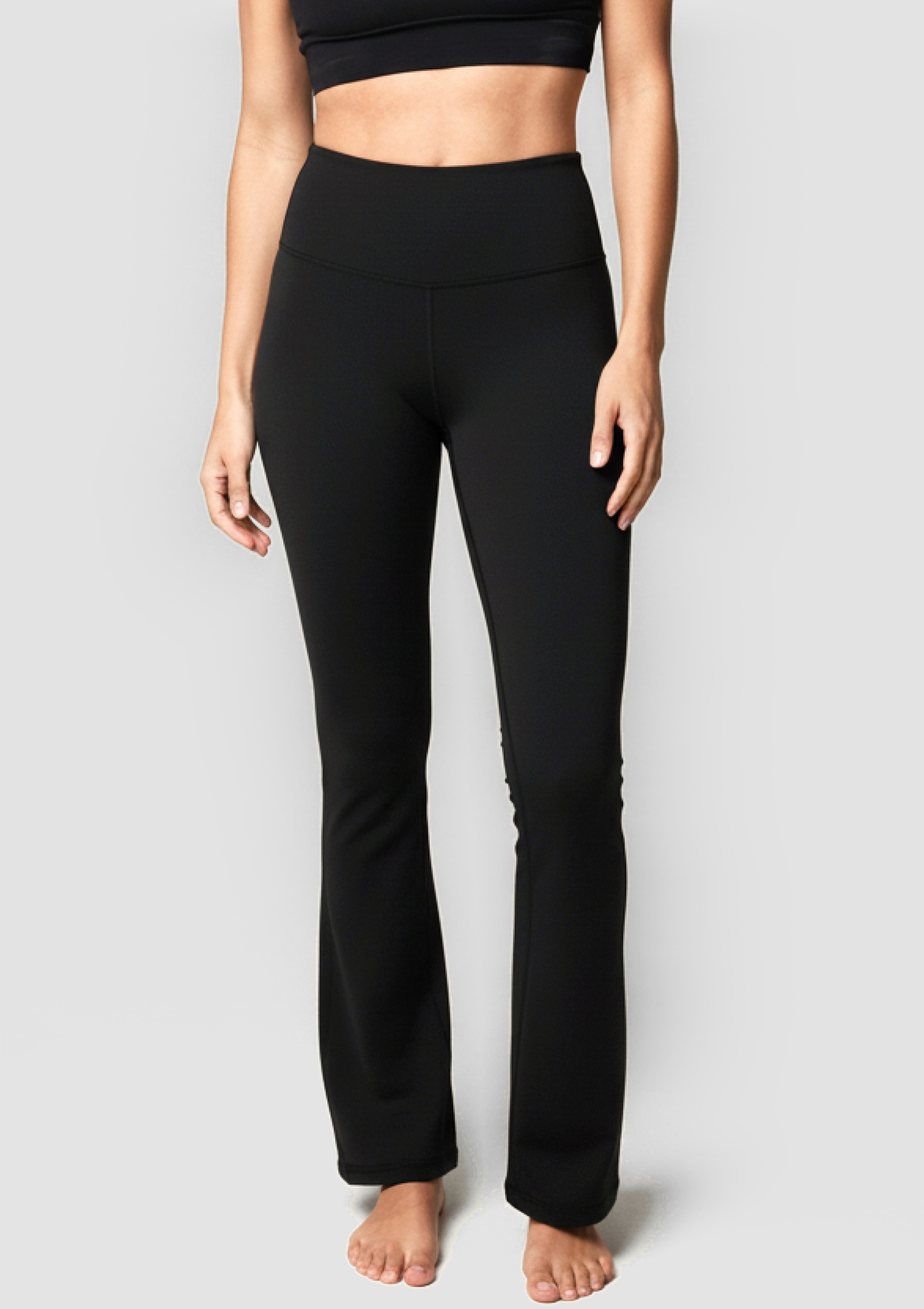
PuraKai's PureFlex fabric is 92% GOTS-certified organic cotton and 8% spandex. We would prefer the number to be zero. It is not, for a mechanical reason we cannot design around.
Organic cotton knit on its own stretches and then stays stretched. Without an elastic fiber, leggings bag at the knee and the waistband gives out, usually within a season. The 8% is what returns the garment to shape after a squat and what keeps it wearable long enough to be worth having made. A garment that fails in three months has a worse footprint than one that lasts three years, whatever its fiber content says.
So we hold the elastane to the lowest percentage that still performs, publish what that percentage does, and offer a genuine alternative for anyone who wants none of it. Our Pure line is 100% organic cotton with no spandex at all. It does not stretch and recover, and it is not meant to. That is the trade, stated in both directions.
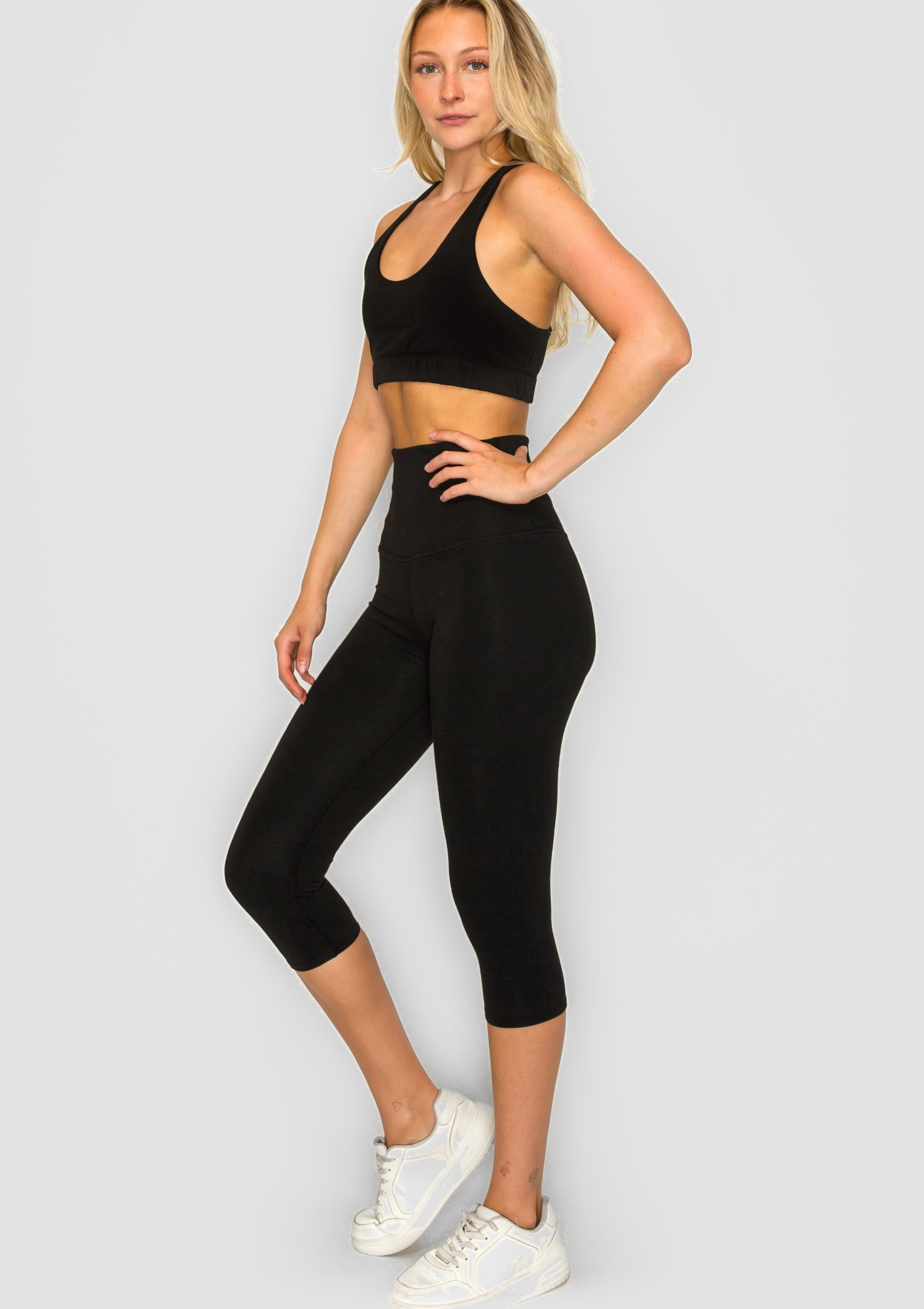
You can see the 92/8 fabric in our organic cotton leggings and across our women's organic cotton activewear, all designed, cut, sewn and finished in our own Los Angeles facility.
How to make spandex last longer
Elastane fails before cotton does, so the life of a stretch garment is usually the life of its 8%.
- Keep it out of high heat. Polyurethane loses recovery permanently above roughly 60 degrees Celsius. Hot washes and hot dryers are the fastest way to kill stretch.
- Line dry. Tumble drying is the single most damaging routine step for elastic fiber.
- Skip fabric softener. It coats the fiber and degrades recovery over time.
- Rinse after chlorinated water. Chlorine oxidizes polyurethane and breaks it down directly.
- Let garments rest between wears. Elastane recovers its shape better with a day off than with back to back wear.
Frequently Asked Questions
Is elastane the same as spandex?
Yes. Elastane is the name used in Europe and on most international labels, spandex is the name used in North America, and Lycra is a brand name for one manufacturer's version. All three describe a fiber that is at least 85% polyurethane by weight. A garment labeled 8% elastane and one labeled 8% spandex are the same thing.
Is there a natural or biodegradable alternative to spandex?
Not in meaningful commercial production yet. Natural rubber latex thread gives elasticity and is used in some elastic bands, but it degrades quickly with heat, oil and body contact, and it is a common allergen, so it is not a practical substitute in activewear. Bio-based polyurethanes that replace part of the petroleum feedstock are appearing, but they are still polyurethane and still shed microplastics. Anyone advertising a plastic-free stretch fabric is worth reading closely.
How much spandex is in PuraKai activewear?
Our PureFlex fabric is 8% spandex and 92% GOTS-certified organic cotton. That is a lower synthetic content than most performance activewear, which is commonly built on polyester or nylon plus spandex and is therefore close to fully synthetic. If you want no spandex at all, our Pure line is 100% organic cotton. For the fiber comparison in full, see organic cotton versus synthetic workout clothes.

Leave a comment
This site is protected by hCaptcha and the hCaptcha Privacy Policy and Terms of Service apply.