

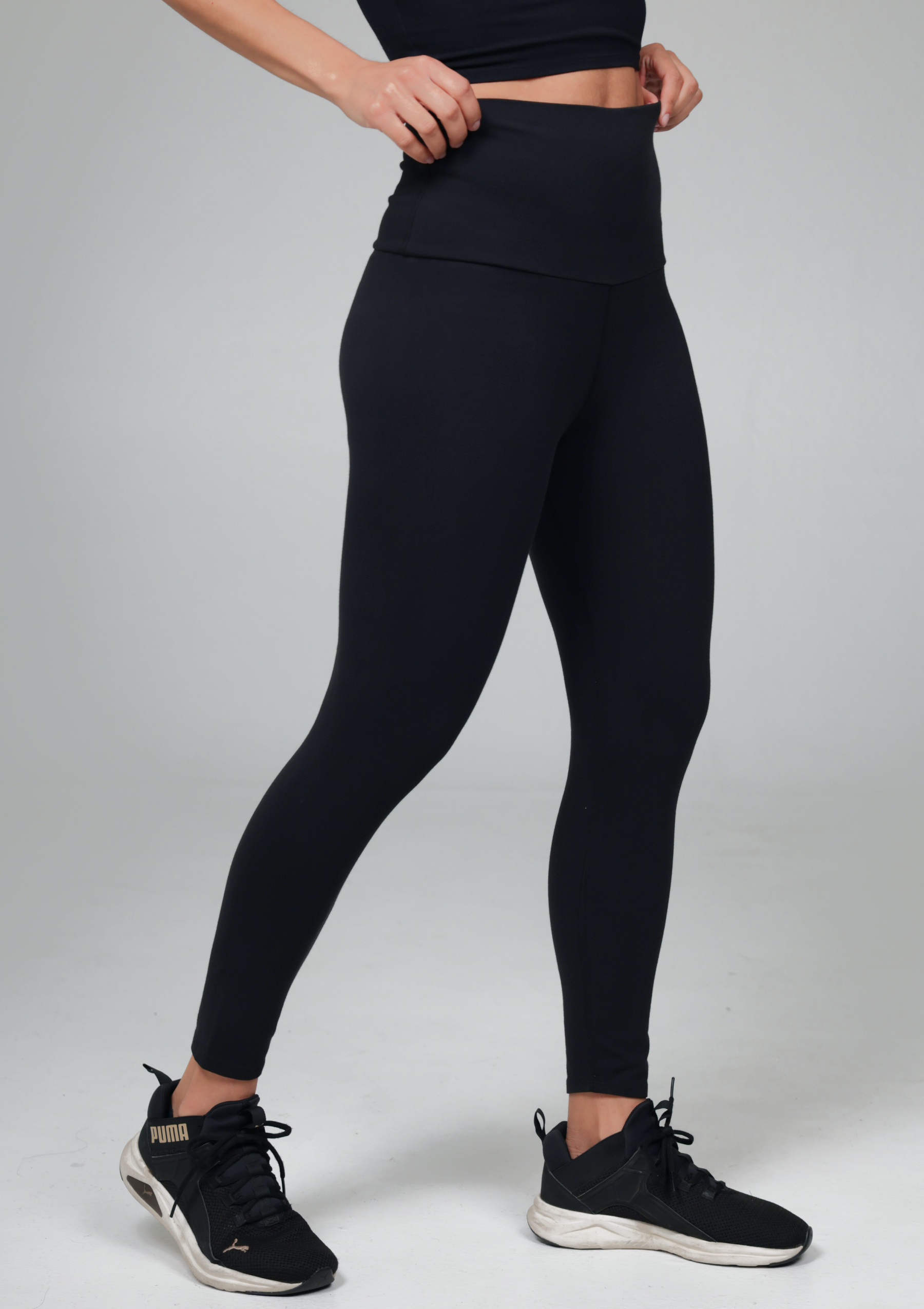
What Is PFAS in Clothing? (And How to Avoid It)
The short answer: PFAS (per- and polyfluoroalkyl substances) are a family of thousands of synthetic chemicals used to make fabrics repel water, oil, and stains. They are often called "forever chemicals" because the carbon-fluorine bond that makes them useful also makes them nearly impossible to break down, in the environment or in your body. They have turned up in rain jackets, stain-resistant pants, period underwear, and workout leggings. You cannot see them, smell them, or wash them out. Here is what the science says, where PFAS hides in your closet, and how to actually avoid it.
What PFAS actually is
PFAS is shorthand for a class of chemicals built around chains of carbon and fluorine atoms. That bond is one of the strongest in organic chemistry, which is the whole point: fabric treated with PFAS sheds water, resists staining, and keeps doing it wash after wash.
The same stability is the problem. PFAS doesn't biodegrade. It accumulates in soil, in water, and in blood. The CDC has found PFAS in the blood of nearly every American tested. Once these chemicals are in circulation, there is no practical way to call them back.
Why it ends up in clothing
Manufacturers add PFAS to textiles to get performance that fibers don't have on their own:
- Water repellency: the durable water repellent (DWR) coatings on rain shells and outdoor gear have historically been PFAS-based.
- Stain resistance: "spill-proof" pants, school uniforms, upholstery.
- Oil and sweat resistance: some performance activewear and shapewear.
The part most people miss: PFAS also shows up where no one advertised it. Independent testing over the past few years has found measurable PFAS in leggings, sports bras, and period underwear from major brands, sometimes in products with no stain-resistance claims at all. One period-underwear maker settled a class action over exactly this. The treatment can enter through coatings, processing aids, or contaminated inputs, which is why a brand can be surprised by its own lab results.
What the health evidence says
PFAS is one of the better-studied chemical families, and the picture is genuinely concerning without needing exaggeration:
- The EPA links exposure to certain PFAS to decreased immune response (including reduced vaccine response in children), developmental effects, higher cholesterol, and increased risk of some cancers.
- In 2023, the International Agency for Research on Cancer classified PFOA, one of the oldest PFAS compounds, as carcinogenic to humans.
- Older compounds like PFOA and PFOS were phased out of US manufacturing, but the replacements are newer PFAS whose long-term effects are less studied, not chemicals of a different family.
An honest caveat: most documented exposure comes from drinking water and food, not clothing. Whether PFAS passes through skin was long assumed to be negligible; recent laboratory research has shown that some PFAS compounds can absorb through human skin, and that the assumption deserved more scrutiny than it got. What we know for certain is that clothing is a chronic-contact route: hours per day, against warm, damp skin, for the life of the garment. Nobody has proven that's harmful at typical levels. Nobody has proven it's safe, either. With chemicals this persistent, we think the burden of proof belongs on the fabric.
The law is already moving
You don't have to take activists' word that this is a real problem. California and New York both banned intentionally added PFAS in new apparel and textiles starting in 2025, with more states following. The EU is weighing a broad restriction. When two of the largest apparel markets in the world outlaw a chemical class in clothing, the debate about whether it belongs there is effectively over. The catch: enforcement takes years, imported inventory lingers, and older garments in your closet were made under the old rules.
How to actually avoid PFAS in your clothes
- Start with untreated natural fibers. PFAS is a treatment, and it's mostly applied to synthetics to make them do things they can't do naturally. Untreated organic cotton, linen, hemp, and wool have no reason to carry it. This is the single swap that does the most work.
- Be skeptical of "stain-resistant" and "water-repellent" claims on everyday clothing. Those properties usually come from chemistry. If the garment doesn't say how, assume the answer is a coating.
- Look for a published lab result, not hangtag language. "PFC-free" and "eco" are marketing terms. A brand that pays for third-party PFAS testing and publishes the actual number, with the article tested and the date, is making a checkable claim. Certifications like GOTS and OEKO-TEX also restrict PFAS in certified products.
- Prioritize the sweat zone. Leggings, bras, underwear, and workout tops sit against warm, damp skin for hours. If you upgrade anything first, upgrade those.
- Know what washing can't do. PFAS treatments are designed to survive laundering. You cannot wash a garment clean of it; you can only buy it that way.

The PureFlex High Neck Racerback Bra in navy: untreated organic cotton for the highest-contact sweat zone, with no stain-resistant or water-repellent coatings.
How PuraKai handles it
Our approach is simple: use a fiber that never needs the chemistry, then verify anyway. PuraKai activewear is made from 92% GOTS-certified organic cotton with 8% spandex, knit, cut, sewn, and dyed in Los Angeles in our own facility, with no stain-resistant or water-repellent treatments of any kind.
And because "we don't add it" is not the same as "it isn't there," we paid an independent testing laboratory to check. In October 2024, Applied Technical Services screened the main fabric of our organic cotton leggings for total fluorine, the limiting marker for the entire PFAS class. The result: none detected, below 2 parts per million, against a current de facto industry limit of 100 ppm. Read the report.
We publish the number rather than a slogan, and we are specific about what it covers: that fabric, on that date. It is strong evidence about the material our activewear is built from, not a permanent guarantee about every garment we have ever made. That is the standard we would want applied to anyone else's claims, so we apply it to our own.
If you're replacing the sweat-zone pieces first, start with organic cotton leggings and organic cotton activewear, and read our deeper piece on PFAS and leggings or the case for skipping synthetics entirely in Is Polyester Bad for You?

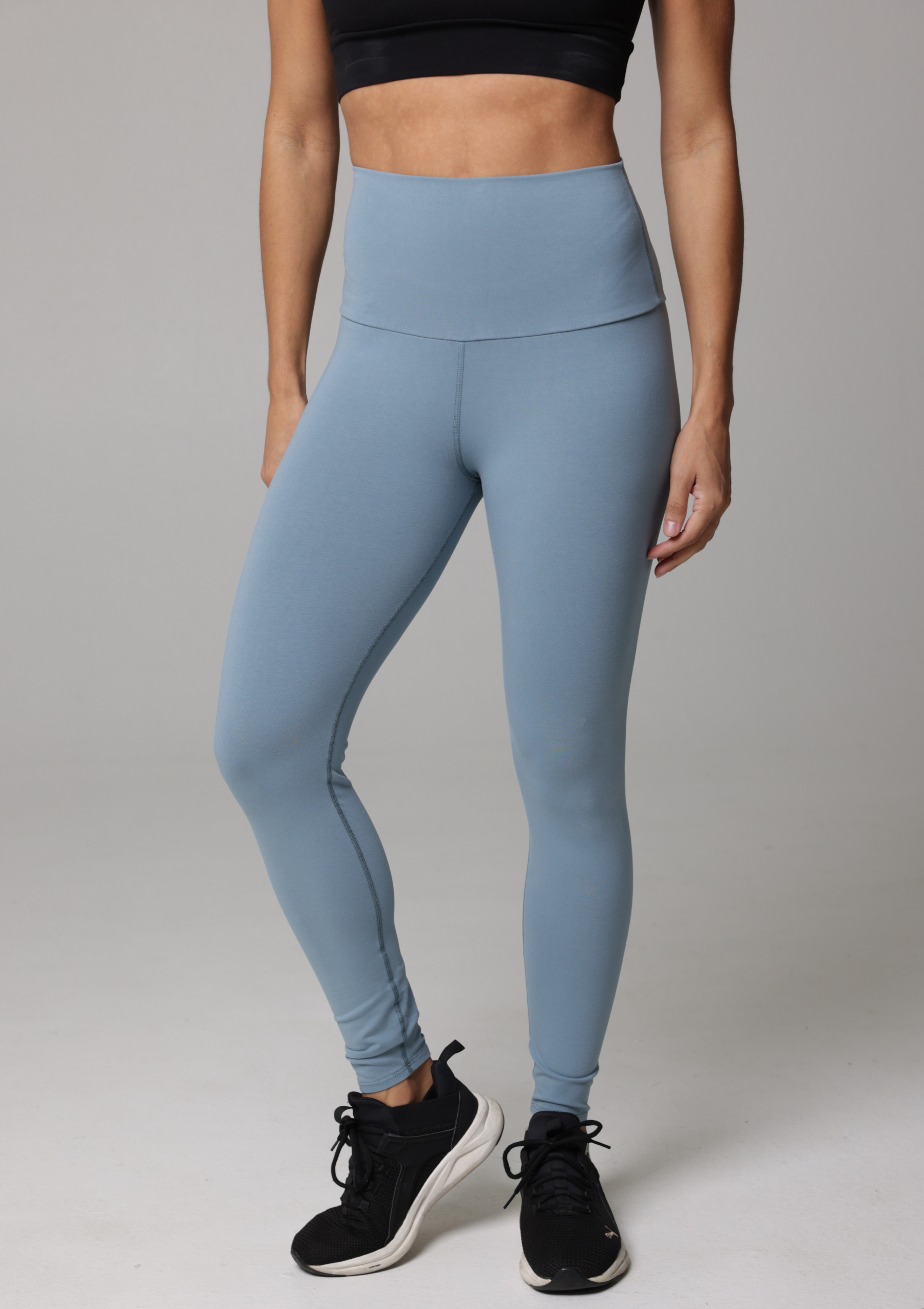
PureFlex Pocket Leggings in Ocean Mist: 92% GOTS-certified organic cotton, no coatings, no treatments.
FAQ
What does PFAS stand for?
Per- and polyfluoroalkyl substances: a class of thousands of synthetic chemicals built on carbon-fluorine bonds, used to make products resist water, oil, stains, and heat.
Why are they called forever chemicals?
The carbon-fluorine bond barely breaks down in nature. PFAS persists in soil and water for decades and accumulates in the body faster than it clears.
Does all activewear contain PFAS?
No. But independent tests have found it in leggings and sports bras from major brands, including products with no stain-resistance marketing. Without testing, you can't tell by look, feel, or price.
Can I wash PFAS out of my clothes?
No. The treatments are engineered to survive laundering. Washing sheds some PFAS into wastewater but does not remove it from the garment.
Is PFAS banned in clothing?
California and New York banned intentionally added PFAS in new apparel starting in 2025, and other states and the EU are moving the same direction. Existing stock and many imports still carry it.
How do I know if my clothing has been tested?
Look for brands that publish an independent lab result stating what was tested, when, by what method, and at what detection limit, or that hold certifications (GOTS, OEKO-TEX) restricting PFAS. A verifiable number beats any adjective on a hangtag.
%20are%20a%20family%20of%20thousands%20of%20synthetic%20chemicals%20used%20to%20make%20fabrics%20repel%20water,%20oil,%20and%20stains.%20They%20are%20often%20called%20%22forever%20chemi...)
Leave a comment
This site is protected by hCaptcha and the hCaptcha Privacy Policy and Terms of Service apply.