

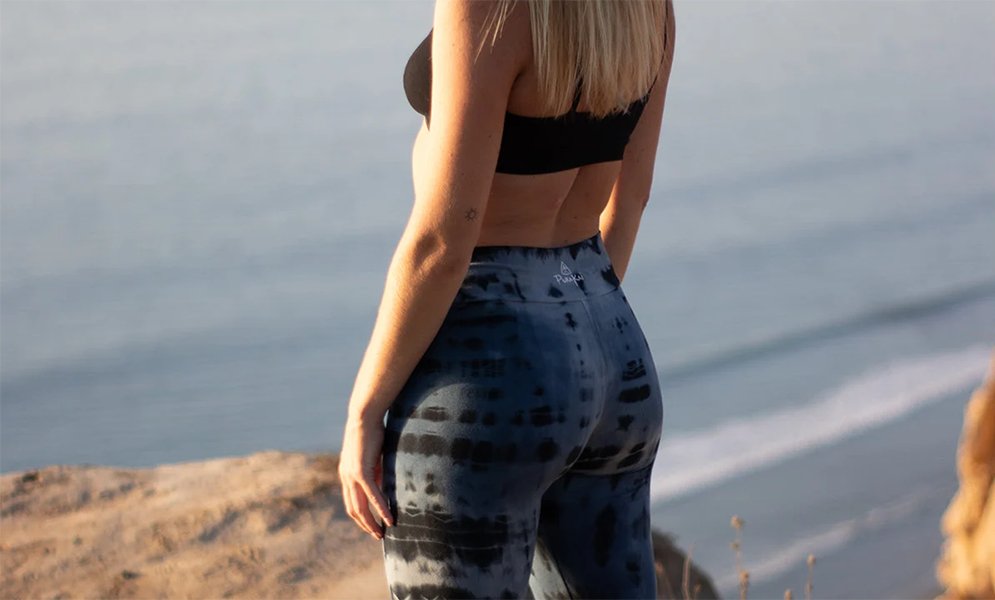
Leggings Made in the USA: How to Verify the Claim (and How Ours Holds Up)
The short answer: most leggings sold in the United States are made overseas, and "designed in USA" labels are engineered to blur that. If you want leggings genuinely made in the USA, you need to know what the label legally means, what to check, and which claims survive a closer look. Ours do, and this guide shows you how to verify that for any brand, including us.
What "Made in USA" Legally Means
The Federal Trade Commission sets a high bar: for an unqualified "Made in USA" claim, all or virtually all of the product must be made in the United States. That covers the significant processing, not just the final stitch. Phrases like "Designed in California" or "American brand" carry no manufacturing meaning at all. They describe an office, not a factory.
For leggings specifically, the steps that matter are knitting the fabric, cutting it, sewing the garment, and dyeing it. A brand can import finished fabric, sew it domestically, and still feel very different from one that starts with yarn in an American knitting mill.
How to Verify a Made-in-USA Claim in Two Minutes
- Look for the process, not the flag. A brand doing real domestic production will name the steps: knit, cut, sewn, dyed, and where. Vague patriotism plus no specifics usually means an imported garment.
- Check the product page's fine print. "Imported" in the details section overrides everything the banner says.
- Ask where the fabric is made. This is the question that separates marketing from manufacturing. Sewing is the last step; fabric is most of the garment.
- Expect honesty about the fiber. Almost no US brand grows all of its own cotton domestically. An honest brand tells you where the fiber comes from instead of implying the whole chain is American.
How PuraKai Leggings Are Made
Every pair of PuraKai leggings is knit, cut, sewn, and dyed in Los Angeles, California. The fabric is our PureFlex blend, 92% GOTS-certified organic cotton and 8% spandex, and the cotton is grown in Texas, Turkey, and India. We say that plainly because it's the honest version: the garment-making is entirely in LA, and the fiber comes from the best certified-organic sources we can get, including American-grown Texas cotton.
A short supply chain is not just a feel-good story. It means we can visit every production partner, catch problems in days instead of seasons, and stand behind each step. It also means the fabric never needed the synthetic treatments long supply chains lean on: Applied Technical Services, an independent testing laboratory, tested our organic cotton leggings fabric and found no PFAS detected, measuring total fluorine below 2 parts per million against a current industry threshold of 100 ppm, and we publish the report. Read the lab report (PDF).
See the leggings themselves in our organic cotton leggings collection, or learn what the fabric certification covers on our GOTS explainer page.
Why Domestic Production Costs More (and What You Get)
We won't pretend otherwise: making leggings in Los Angeles costs more than making them offshore. Fair wages and local production are real costs. What that buys you is a garment with accountability built in: known factories, verified fabric, published testing, and quality control that happens in person. A well-made pair of cotton leggings also softens and improves with washing rather than pilling and going crispy, so cost per wear tends to work out in your favor. Our comparison of cotton and synthetic workout clothes covers that side in detail.
Frequently Asked Questions
Are PuraKai leggings really made in the USA?
Yes. Every pair is knit, cut, sewn, and dyed in Los Angeles, California. The organic cotton fiber is grown in Texas, Turkey, and India, and we state that openly rather than implying the fiber is all-American.
Why are leggings made in the USA more expensive?
Domestic wages and factory standards cost more than offshore production. The trade is accountability: short supply chains, verifiable claims, and quality checked in person rather than by container.
What should I check before trusting a Made-in-USA label?
Ask where the fabric is knit and where the garment is cut, sewn, and dyed. Under the FTC standard, an unqualified Made-in-USA claim requires that all or virtually all of the making happen domestically. Specific steps and places are the tell; vague flag-waving is the red flag.

Leave a comment
This site is protected by hCaptcha and the hCaptcha Privacy Policy and Terms of Service apply.