

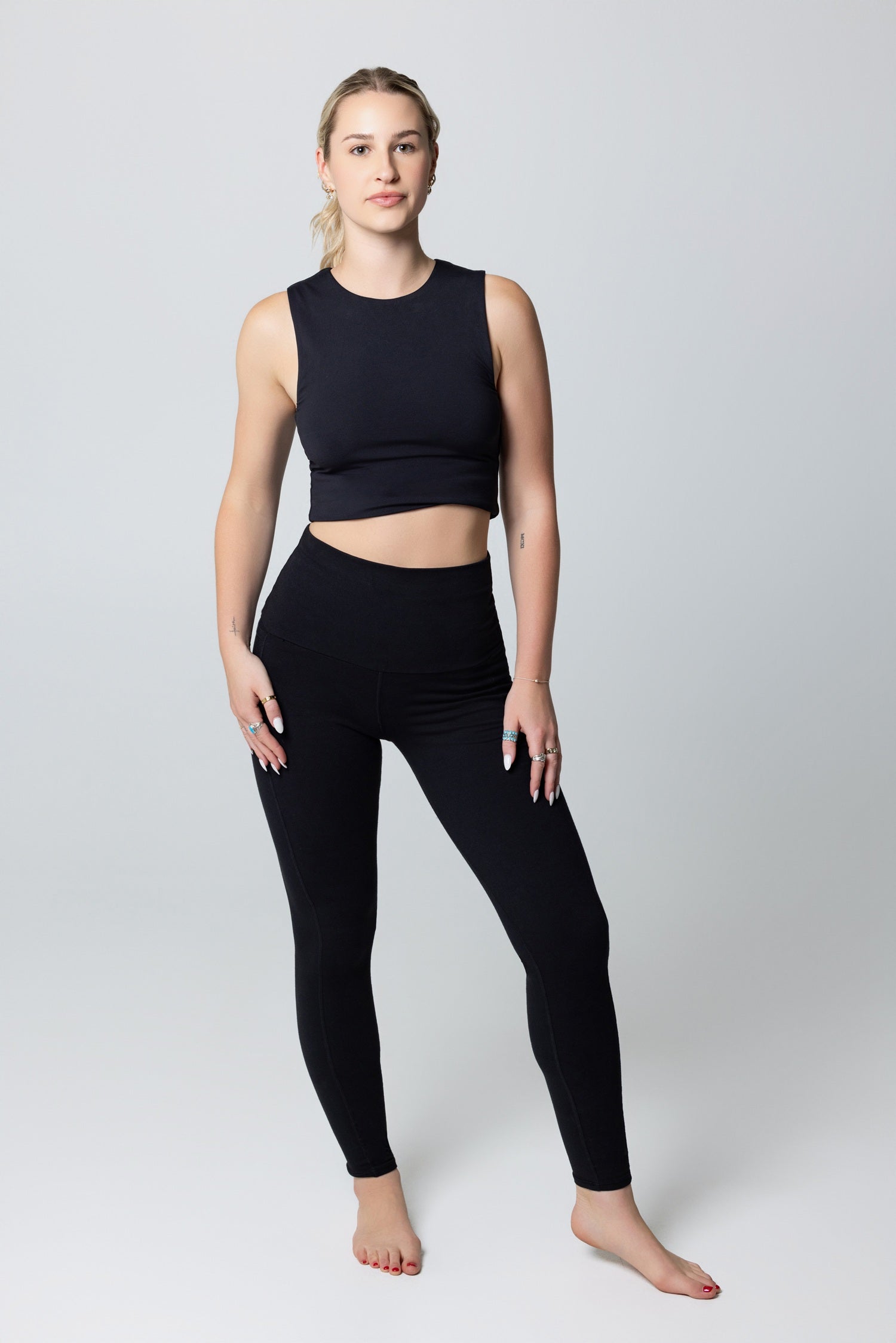
Cotton Yoga Leggings: Stretch, Breathability, and Best Uses
The short answer: Cotton yoga leggings can work well for restorative yoga, hatha, Pilates, everyday wear, and many vinyasa classes. Stretch, opacity, waistband stability, seams, fit, and sweat level all matter. A cotton-majority blend usually suits close-fitting leggings better than 100% cotton because stretch fiber helps the fabric recover. For hot or high-sweat sessions, cotton-majority fabric may feel damp longer.
What to expect from cotton yoga leggings
Cotton yoga leggings come in many fabrics. Loose 100% cotton yoga pants behave differently from a fitted 92% organic cotton and 8% spandex knit. Weight, knit structure, waistband construction, and sizing also matter.
Stretch and recovery
Cotton can flex when knitted, but it does not provide the same elastic recovery as spandex. Recovery helps knees, hips, and the waistband return to shape after a deep bend. Research on elastane in knitted fabrics shows that the elastane percentage affects recovery and fit.
PuraKai PureFlex uses 92% organic cotton and 8% spandex. That makes these organic cotton leggings natural-fiber rich, not synthetic-free. The distinction is useful. Organic cotton makes up the clear majority of the fabric, while the spandex supplies stretch for poses, squats, and daily movement. A shopper who wants zero manufactured fiber should look for a looser 100% organic cotton pant and expect a different fit.
Breathability and sweat
Breathability is not a simple cotton versus polyester contest. Airflow and water-vapor movement also depend on thickness, knit structure, porosity, and fit. A study of sportswear fabrics found that fabric geometry and material properties both affected water-vapor resistance.
Cotton readily takes up moisture. The trade-off appears as sweat rises. Controlled textile research found that cotton absorbed more water than polyester and took somewhat longer to dry. An exercise study found that humidity dropped more quickly after exercise under a polyester garment. Neither finding makes one fiber healthiest.
For a fuller look at material trade-offs, read is polyester bad for you. The practical point for yoga is modest: cotton-majority leggings absorb moisture, while many performance synthetics are designed to move or release it faster.
Opacity
A cotton label does not guarantee coverage. Opacity depends on fabric weight, color, knit density, size, and stretch. A pair can look opaque while standing and become sheer in a forward fold or squat.
The best check is movement. Wear the underwear you would use for class. Test the leggings in daylight and bright indoor light. Bend, squat, step into a long lunge, and fold forward. If the fabric changes color, the knit opens visibly, or the underwear line becomes clear, try the next size or a denser fabric.
Waistband stability
A waistband should stay level through a fold, twist, and lunge without feeling restrictive. Height alone does not make it stable. Look at the width of the waistband, the amount of recovery in the fabric, and whether the size fits both waist and hips.
Rolling can mean the waistband is too tight, too soft for the movement, or sitting where the torso naturally creases. Sliding can mean the leggings are too large or lack enough recovery. Test both problems before removing tags. A secure waistband should not need repeated pulling during practice.
Seams and pockets
Seams should lie flat enough that they do not distract during floor work. Check the inner thighs, crotch, back rise, and waistband after several wide steps. A gusset or well-shaped crotch construction can give the legs room to separate without pulling the whole garment downward.
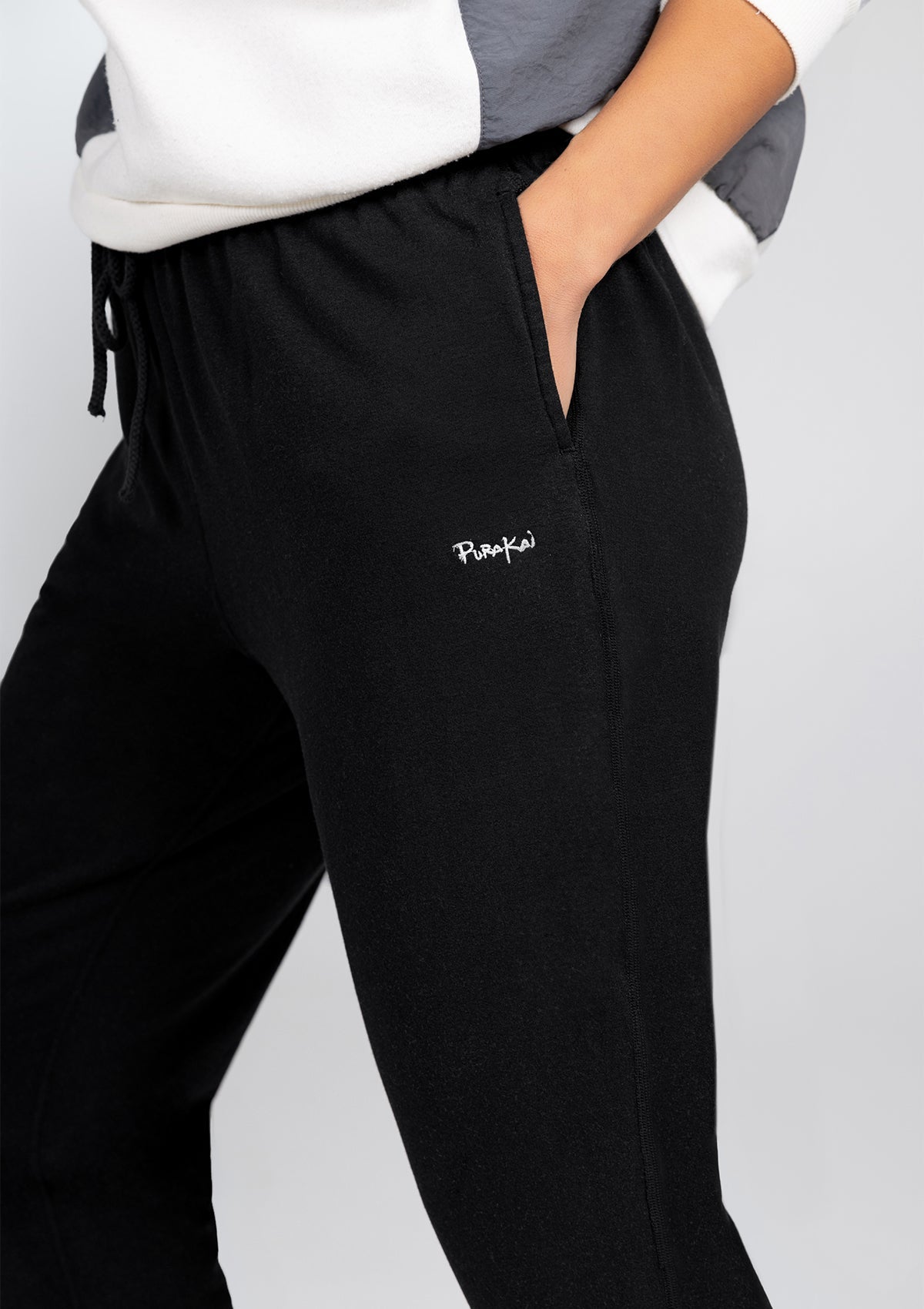
Pockets are useful for walking to class and everyday wear. They can be less useful during poses that press the outer hip into the mat. Put a phone in each pocket before deciding. Make sure the weight does not drag the waistband down and the pocket opening does not gape in a lunge.
A bend-and-movement fit checklist
- Start with the brand's size chart. Do not size down only to create more compression.
- Check the waistband while standing. It should sit flat without digging or gaping.
- Take a deep squat. Confirm that the waistband stays in place and the fabric remains opaque.
- Move into a forward fold. Check the back rise, waistband, and coverage under bright light.
- Step into a high lunge on both sides. Look for pulling at the crotch, inner thigh, or knee.
- Try a seated twist and a figure-four position. Notice any seam pressure at the hips or waist.
- Walk, climb stairs, and sit for several minutes. The knees should recover instead of staying baggy.
- If the leggings have pockets, test them with the actual phone or keys you plan to carry.
Judge the pair after movement. A good fit gives full range without constant adjustment. If you are between sizes, favor opacity and waistband comfort.
Best uses by yoga style and activity
Restorative yoga
Restorative classes involve long supported holds and usually less sweat. Cotton-majority leggings suit this use when the waistband stays comfortable while lying down or folding.
Hatha yoga
Hatha mixes standing poses, floor work, and measured transitions. Prioritize reliable recovery, opacity in wide stances, and a waistband that stays stable through folds.
Vinyasa
Vinyasa links poses in a continuous sequence and may produce more sweat. Cotton-majority leggings can work, but they may feel damper. Give extra attention to recovery, seams, and waistband hold.
Hot yoga
Hot yoga presents the clearest trade-off. Cotton can hold more perspiration during a heavy-sweat class. Some people accept that feel. Others prefer faster drying or organic cotton shorts with less coverage.
Pilates
Pilates calls for controlled movement and frequent contact with a mat or equipment. Smooth seams and stable recovery matter. Empty pockets before equipment work so objects cannot press into the hip.
Everyday wear
For walking, errands, travel, or desk time, pocket leggings add practical storage. The same fit test applies because a waistband that rolls in yoga will usually roll while sitting.
How to read cotton yoga-pant terminology
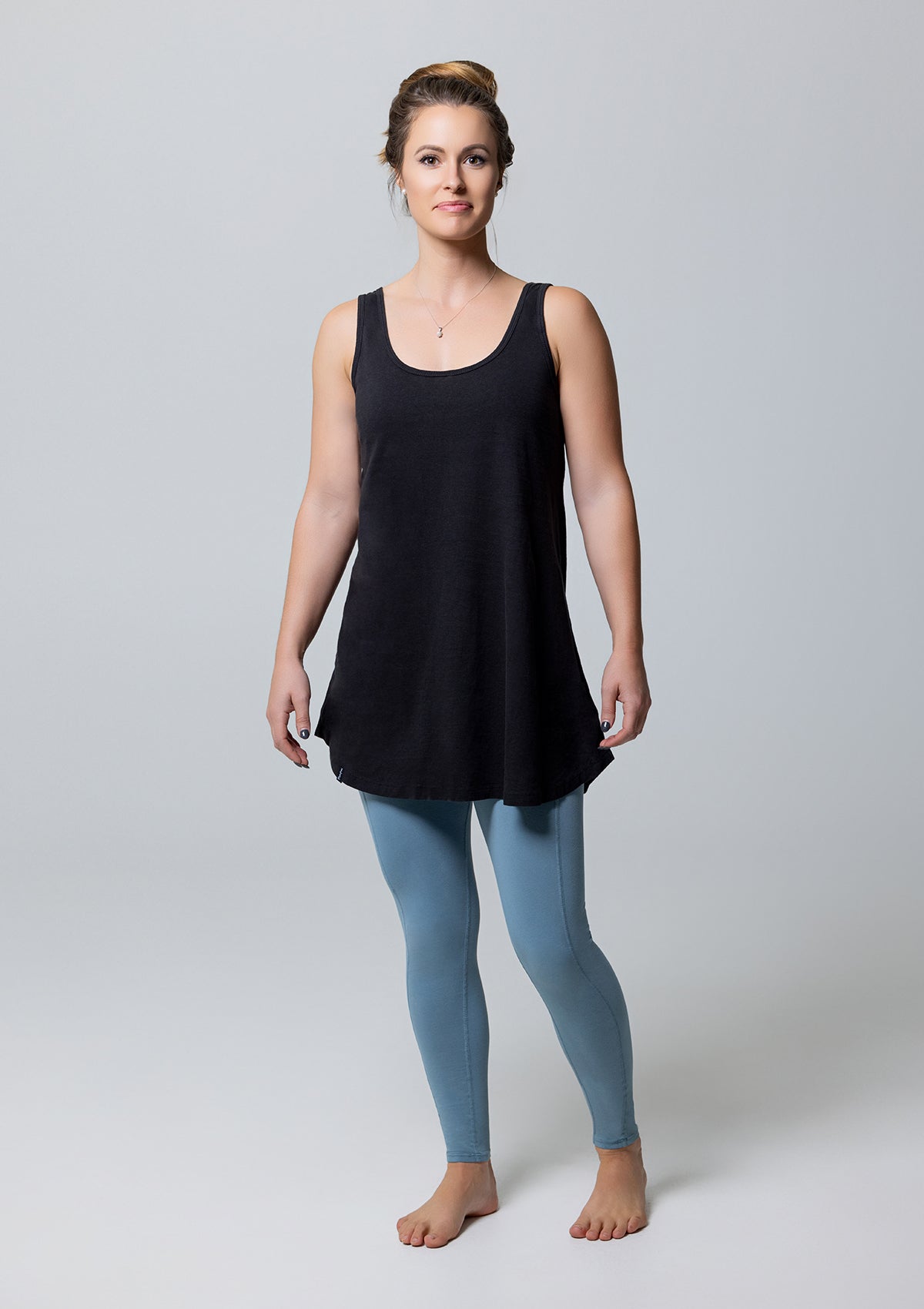
Yoga pants is a broad retail term. It may describe bootcut pants, loose drawstring styles, or close-fitting leggings. Yoga leggings usually means an ankle-length, body-hugging style. Neither name tells you the exact fiber content, fabric weight, or construction.
Natural fiber yoga clothes can also contain a manufactured stretch fiber. In the United States, the FTC Textile Fiber Rule requires covered textiles to disclose the generic names and percentages by weight of their constituent fibers. Read that label instead of relying on phrases such as natural, clean, or healthy yoga pants. The FTC also recognizes elastane as another name for spandex in fiber identification guidance.
Organic cotton yoga pants describes the agricultural status of the cotton, not a promise that every garment part is organic or natural. GOTS states that it starts where organic farming activities end, so it is a post-harvest textile standard, not a farm standard. PuraKai uses GOTS-certified organic cotton in its activewear fabric. PuraKai itself does not claim GOTS certification.
Why PuraKai PureFlex is the first place to look
We make PureFlex organic cotton yoga leggings in our own Los Angeles facility. Design, cutting, sewing, and finishing happen under one roof in our building. Los Angeles partners handle knitting and garment dyeing. The fabric is 92% GOTS-certified organic cotton and 8% spandex, so we describe it as natural-fiber rich and state the synthetic share plainly.
Start with the High Waist Leggings; choose the High Waist Pocket Leggings when storage matters. Choose the High Waist Pocket Leggings when storage matters, or Capri Leggings when you prefer less lower-leg coverage. These are the leading legging styles in our current 90-day sales data, and customer reviews support their quality. PuraKai is a father-and-daughter founded small business with no venture capital or private equity.
On PFAS, we publish the test result rather than a blanket claim: Applied Technical Services independently tested our organic cotton leggings fabric and found no PFAS detected, measuring total fluorine at below 2 parts per million against a current industry threshold of 100 ppm. The report covers the tested fabric article, not every piece of clothing. Read more about the scope in our PFAS leggings guide, then compare fits in the organic cotton leggings collection.
Frequently Asked Questions
Are cotton yoga pants and cotton yoga leggings the same?
Not always. Cotton yoga pants can be loose, straight, bootcut, or fitted. Cotton yoga leggings usually describes a close-fitting style from waist to ankle. Check the product cut and fiber label because the name alone does not define either one.
Are 100% cotton yoga leggings stretchy enough?
A knitted 100% cotton fabric can flex, but it usually will not recover like a blend with spandex. That can work for a loose yoga pant. For fitted leggings that need to hold shape through bends and lunges, a cotton-majority blend with a stated stretch-fiber percentage is often more practical.
Are cotton yoga leggings good for hot yoga?
They can be, but expect a damper feel during heavy sweating because cotton takes up moisture and may dry more slowly. Some people prefer that. Others choose a faster-drying legging or organic cotton shorts. Fit, room temperature, class length, and personal comfort matter more than a universal fabric ranking.

Leave a comment
This site is protected by hCaptcha and the hCaptcha Privacy Policy and Terms of Service apply.