

Can Leggings Disrupt Your Hormones? What the Evidence Actually Says
Can Leggings Disrupt Your Hormones? What the Evidence Actually Says
The short answer: some chemicals used in textile manufacturing are established endocrine disruptors, and leggings are close to the worst case for skin exposure, because tight fit plus sweat substantially increases how much of a chemical moves from fabric into skin. What is not established is that ordinary leggings are a meaningful driver of hormone problems in the general population. The chemistry is real, the exposure route is real, and the size of the effect from clothing specifically has not been well quantified.
That is a less satisfying answer than either version you usually see. One side sells the idea that your leggings are poisoning you. The other says there is nothing to discuss. The evidence supports neither.
Here is what is actually known, chemical by chemical, with sources.
What an endocrine disruptor actually is
An endocrine-disrupting chemical interferes with hormone signalling: mimicking a hormone, blocking a receptor, or changing how much of a hormone the body makes or clears. The category is defined by mechanism, not by severity. A substance can be a genuine endocrine disruptor in a laboratory assay and still be irrelevant at the dose you actually encounter.
This is why "contains an endocrine disruptor" and "will disrupt your endocrine system" are different statements. Dose and route decide which one applies.
The five chemicals people name
1. Phthalates
Phthalates are plasticisers. In apparel they turn up mainly in plastisol screen prints, coated or waterproof fabrics, and some elastic components, rather than in plain knitted fabric. Several are well-established endocrine disruptors. The US Consumer Product Safety Commission restricts eight phthalates above 0.1 percent in children's toys and child care articles, a rule effective April 2018. There is no equivalent limit for adult clothing.
On exposure routes, the picture is more nuanced than "it's all diet." A 2023 systematic review and meta-analysis found that for heavier phthalates such as DEHP, indoor dust ingestion contributed most of the daily intake among non-dietary routes, while for lighter, more volatile phthalates, dermal absorption from air dominated. Diet remains a major route overall, but skin is not a trivial one.
2. BPA
BPA is best known from polycarbonate plastics and can linings, and is a recognised endocrine disruptor. It has been reported in some sportswear, most often associated with polyester and elastane.
The nuance that gets dropped: reported detections in clothing have largely come from advocacy testing rather than peer-reviewed exposure studies, and detection is not absorbed dose. A number in a press release tells you a substance is present, not that it reached your bloodstream in a meaningful quantity.
3. Formaldehyde
Formaldehyde resins are used for wrinkle resistance and easy-care finishes. The International Agency for Research on Cancer classified formaldehyde as carcinogenic to humans, Group 1, based on sufficient evidence for nasopharyngeal carcinoma, and reaffirmed that in 2012 while also concluding it causes leukaemia.
That classification rests on inhalation exposure, largely occupational: industrial workers, embalmers, anatomists. The documented risk from wearing treated clothing is allergic contact dermatitis, not cancer. This is the clearest case on this list of a real hazard being quoted at the wrong route of exposure, and conflating the two is how a true fact becomes a misleading claim. Worth noting as well: formaldehyde finishes are applied for wrinkle resistance, which is not a treatment stretch knit activewear typically receives.
4. Azo dyes
Azo dyes are the largest dye class in textiles, and most are unremarkable. A specific subset breaks down to release aromatic amines, some carcinogenic. REACH Annex XVII, entry 43 lists 22 such amines and bars azo dyes that release any of them above 30 mg/kg from textiles in direct and prolonged skin contact. The United States has no equivalent restriction and no disclosure requirement, which is a real regulatory gap.
But note what the restriction is about: carcinogenicity, not hormone disruption. Azo dyes are not an endocrine-disruptor class. Listing them under a hormone headline is a category error, and it is a common one.
5. PFAS
PFAS are used in durable water repellent and stain-resistant finishes. This is the strongest item on the list, and the only one where the hormone connection is well supported.
The National Academies' 2022 guidance on PFAS exposure and clinical follow-up found sufficient evidence of increased risk for kidney cancer, dyslipidemia, and thyroid disease, and recommends thyroid function testing for adults with serum PFAS at or above 20 ng/mL. Thyroid disease is an endocrine outcome, and it sits in the highest evidence tier, not a speculative one.
It is also the item you can actually check, because PFAS testing exists and some brands publish results.
Why leggings are the hard case
The usual reassurance is that skin absorbs chemicals inefficiently compared with the gut or lungs. That is true for dry contact, and it is where the "nothing to see here" position comes from. It is also incomplete.
A 2025 study in Science of the Total Environment modelling dermal transfer from children's textiles found that sweat markedly increased absorption compared with dry contact, by orders of magnitude for PFAS and organophosphate esters. The same work detected PFAS in the large majority of textile samples tested, and found durable-water-repellent garments carried roughly three times the PFAS of conventional items.
Tight fit, heat, friction, prolonged wear, sweat. Leggings hit every condition that raises dermal transfer. So the honest version of the argument is not "your leggings are disrupting your hormones." It is: if a garment carries a problem finish, leggings are the garment most likely to deliver it. Which makes the finish, not the fear, the thing to check.
What actually reduces your exposure
- Skip performance finishes. Water-repellent, stain-resistant, odour-control, and wrinkle-free all mean something was applied after the fabric was made. On the PFAS evidence above, this is the single highest-value filter.
- Read the fibre percentage, not the marketing. The number is on the label. "Cotton-majority," "clean," and "natural" are not defined terms.
- Prefer published results over adjectives. A brand publishing a dated lab report that names the article tested is making a checkable statement. "Non-toxic" and "chemical-free" are unregulated words that mean whatever the seller wants.
- Ask what a certification covers. GOTS restricts chemicals and dyes permitted in processing. OEKO-TEX tests finished products for a list of substances. They answer different questions, and both are more specific than a brand's own adjective.
- Wash new clothes before wearing. This reduces surface residues from processing and shipping.
How to read a leggings label
Fibre content is where marketing meets arithmetic. Most technical activewear is predominantly synthetic, and many leggings sold as cotton contain a large minority of polyester and elastane. Check the number rather than the noun.
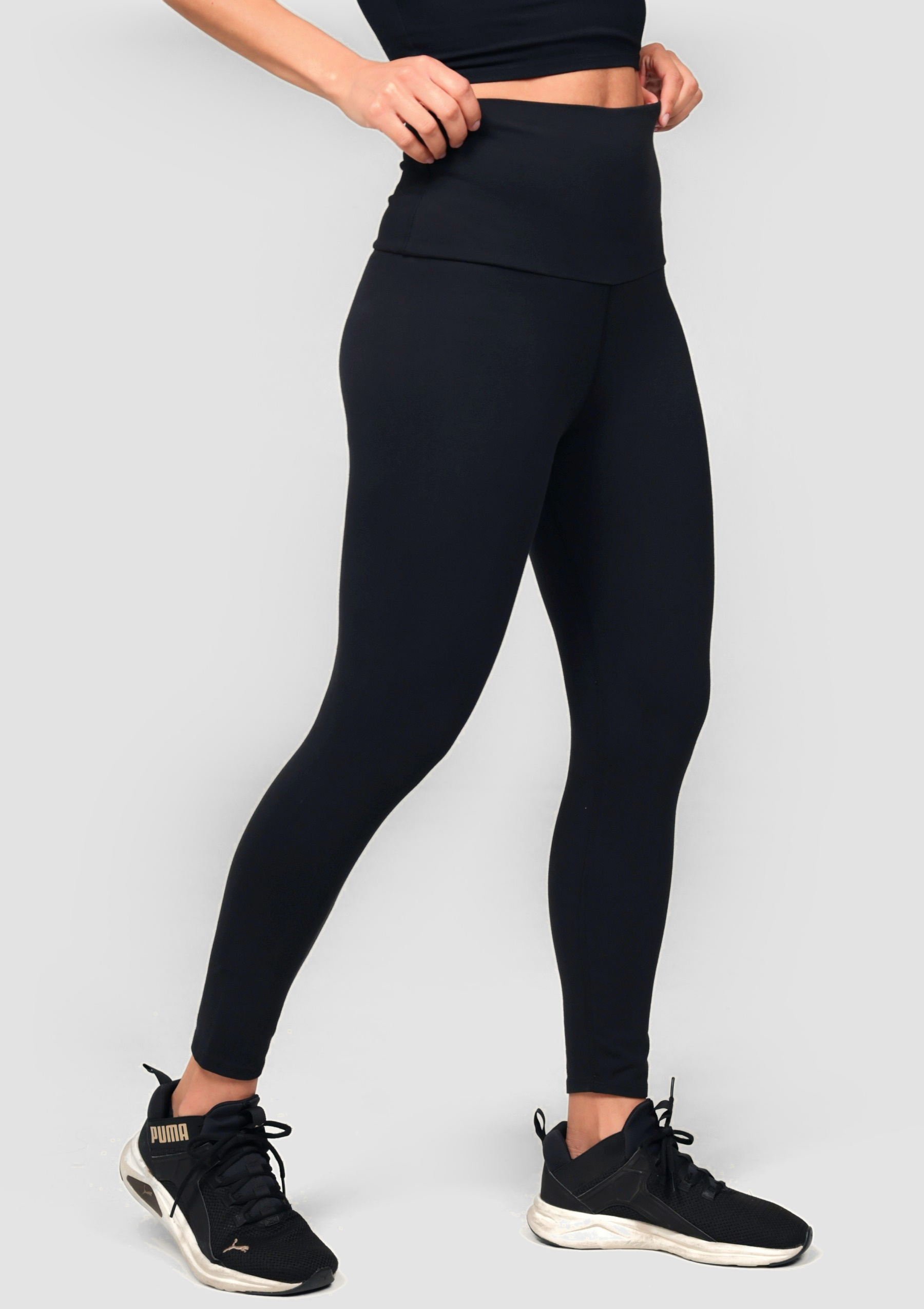
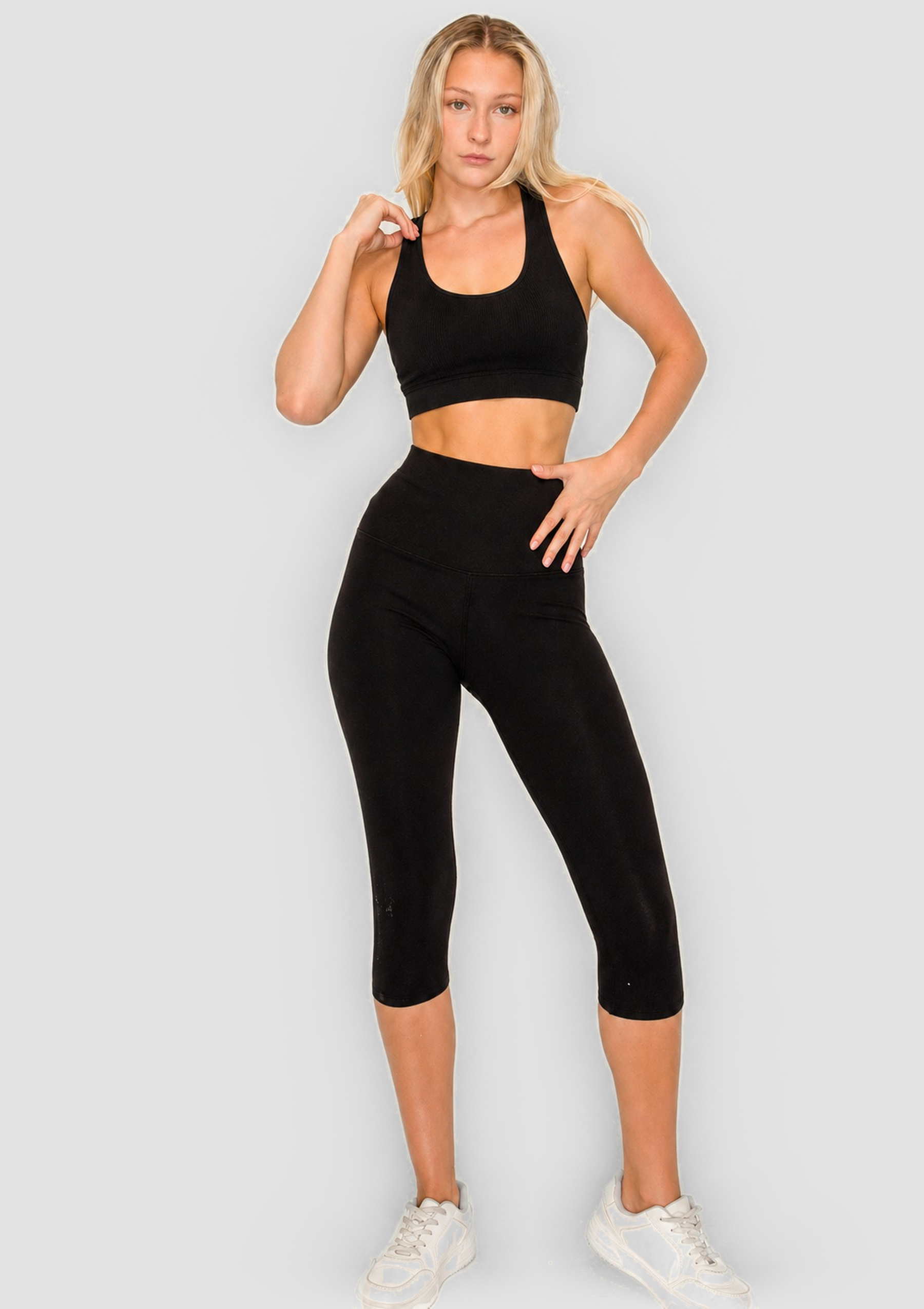
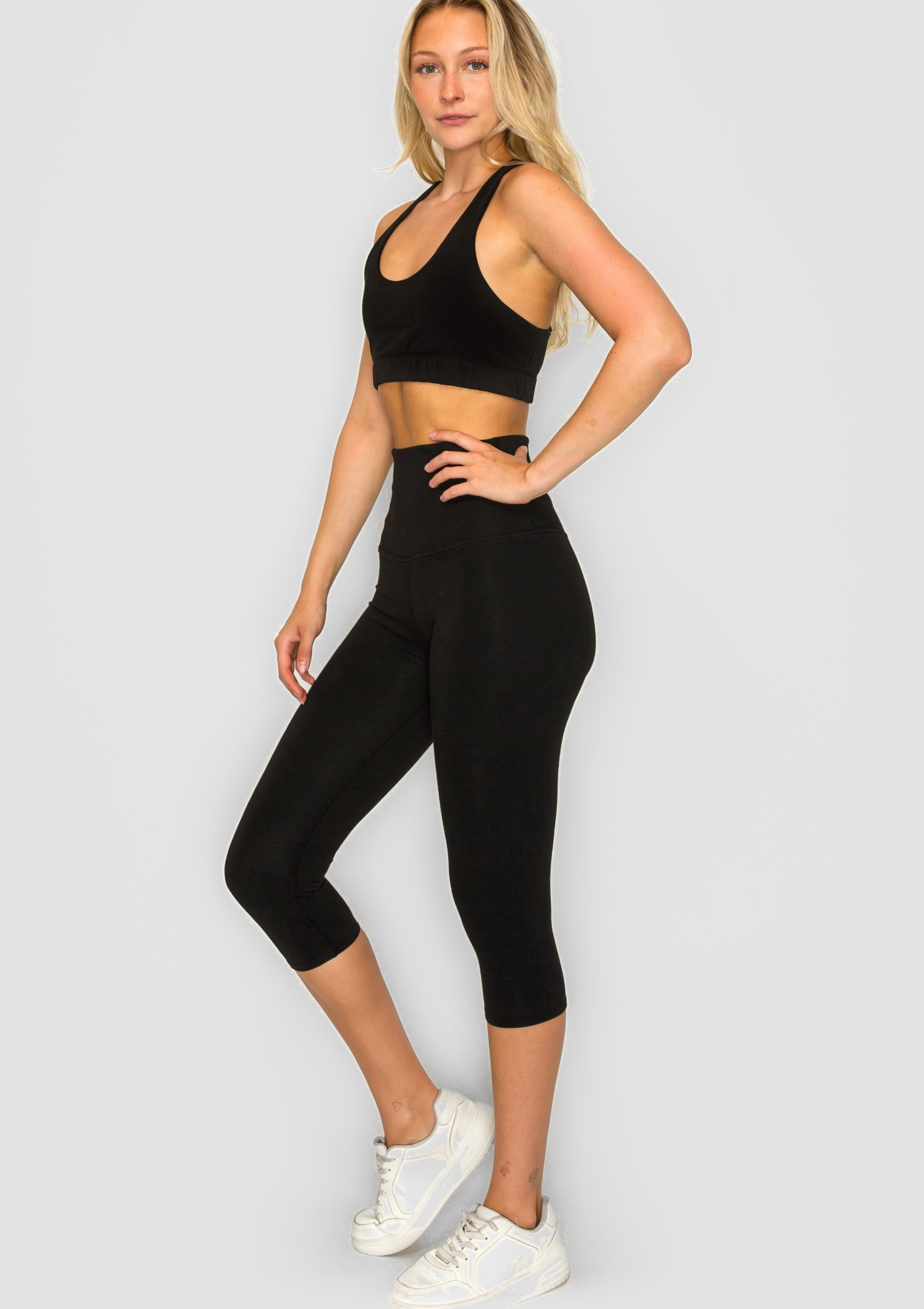
PuraKai PureFlex is 92 percent GOTS-certified organic cotton and 8 percent spandex. Our Pure line is 100 percent GOTS-certified organic cotton.
One category worth understanding, because it is often sold as the clean alternative: bamboo viscose is not bamboo in the finished fabric. It is regenerated cellulose, chemically dissolved and re-formed. The FTC requires it be labelled "rayon made from bamboo" rather than bamboo, has warned 78 retailers over the practice, and has levied civil penalties over it. The conventional viscose process uses carbon disulfide, and the ATSDR toxicological profile and occupational reviews of the viscose industry document nervous system, cardiovascular, fertility and hormonal effects in exposed workers, including menstrual disturbance.
That does not mean a viscose garment harms the wearer. Residual solvent is a production and worker-safety issue, not a wear issue. But a fabric whose defining feature is chemical processing, produced with a solvent documented to affect hormones in the people making it, is an unusual centrepiece for an argument about manufacturing chemistry and hormones.
Also worth stating plainly: no stretch fabric is fully plant-based today. Every legging with meaningful stretch contains a synthetic elastic fibre, ours included. Anyone claiming otherwise is redefining a word.
What PuraKai claims, and what we do not
We are a family business that has made organic cotton clothing in the United States since 2012, and we own our Los Angeles factory, where PureFlex and Pure are cut and sewn.
On PFAS, we publish the test result rather than a blanket claim: Applied Technical Services, an independent testing laboratory, tested our organic cotton leggings fabric in October 2024 and found no PFAS detected, measuring total fluorine at below 2 parts per million against a current industry threshold of 100 ppm. Read the lab report. That report covers one article, our leggings fabric, and we say so rather than extending it to everything we sell. We do not use DWR coatings or fluorinated finishes.
We are a licensed California garment manufacturer, registration GA-LR-1001309619, which you can verify yourself in the state database. That is a legal accountability record rather than a marketing badge, and almost no apparel brand will point you at one.
What we do not claim: that our clothing is non-toxic, chemical-free, or free of every substance on this page. We have not tested for phthalates, BPA, or formaldehyde, so we make no statements about them. Cotton is a chemical. Every garment goes through processing. The useful question is which substances, at what level, verified by whom, and on which article.
Frequently asked questions
Can leggings really affect your hormones?
Some textile chemicals are established endocrine disruptors, and PFAS in particular is linked to thyroid disease at the highest evidence tier in the National Academies' 2022 review. Sweat and tight fit meaningfully increase how much of a chemical moves from fabric into skin, and leggings are the garment where those conditions apply most. What is not established is that ordinary legging wear drives hormone problems in the general population. Choosing garments without performance finishes is the practical response.
Are organic cotton leggings free of these chemicals?
Not automatically. Organic describes how the fibre was grown, and finishes are applied after fibre becomes fabric. GOTS certification is more useful here, because it restricts the chemicals and dyes permitted in processing, not only the farming.
Is spandex the problem?
Spandex is a synthetic elastic fibre and the health case against it in normal wear is weak. Its clearer downside is environmental: the synthetic fraction sheds microfibre in the wash. PureFlex is 8 percent spandex, so that fraction does shed, and we say so in does organic cotton shed microplastics rather than claiming otherwise. For what the fibre actually is, see what spandex is made of.
What should I look for if I am worried?
A specific fibre percentage, no performance finishes, a certification that covers processing rather than only fibre, and a published test result with a date and a named laboratory.

Leave a comment
This site is protected by hCaptcha and the hCaptcha Privacy Policy and Terms of Service apply.