

Is Polyester Bad for You? What the Science Actually Says
The short answer: Polyester is not acutely dangerous to wear, but there are legitimate, science-backed reasons for concern, especially in activewear. Polyester garments can carry chemical finishes (including PFAS in some performance wear), shed microplastics into water and air with every wash, trap heat and odor against your skin, and irritate sensitive skin. If you sweat in your clothes, the case for natural fibers gets stronger, because heat and moisture increase how much your skin is exposed to whatever is in or on the fabric.
Here is the longer answer, with the evidence and without the fear-mongering. And because "is polyester bad?" is really half a question, we'll also look at the other half: what you'd be wearing instead, and how differently the two fabrics come into the world.
What polyester actually is
Polyester (polyethylene terephthalate, or PET) is a plastic made from petroleum. It's the same polymer family as water bottles, spun into thread. About half of all clothing made today contains it, because it's cheap, durable, and easy to manufacture.
The fiber itself is fairly inert. The concerns are about what comes with it: the chemistry used to make it perform (wick, stretch, resist stains and odor), what it sheds, and how it behaves against sweating skin.
The four evidence-based concerns
1. Chemical finishes, including PFAS, on performance fabrics
Synthetic activewear is often treated to do things plastic doesn't naturally do: resist stains, block odor, repel water. Some of those treatments have included PFAS ("forever chemicals"), which the EPA links to health effects including immune and developmental impacts. Independent testing by consumer-health groups has repeatedly found PFAS in name-brand leggings and sports bras. These are products marketed for workouts, worn tight against skin, for hours.
This is why third-party testing matters more than marketing copy. It is also why we paid an independent testing laboratory to screen our own organic cotton leggings fabric, and why we publish the actual number instead of a slogan: total fluorine came back none detected, below 2 parts per million. Verifiable beats vague.
2. Antimony and residual processing chemicals
Most polyester is made using antimony trioxide as a catalyst, and trace amounts remain in the finished fiber. Regulators consider the levels in clothing low-risk, but studies have shown antimony can migrate out of PET with heat and moisture, which is exactly the environment inside leggings during a workout. The honest summary: the dose is probably small, and the studies on long-term, low-dose skin exposure simply haven't been done.
3. Microplastics, in the wash and on your skin
Every wash cycle releases plastic microfibers, and synthetic textiles are one of the largest sources of microplastic pollution in the ocean. Newer research has also documented fiber shedding directly onto skin and into household air. Microplastics have now been found in human blood, lungs, and placental tissue. Science hasn't yet established what that means for health, but "we put it everywhere before we understood it" is not a comforting precedent.
4. Heat, sweat, and skin irritation
Polyester doesn't absorb moisture; it moves sweat around until it evaporates. For many people that's fine. For people with sensitive skin or eczema, trapped heat plus synthetic dye chemistry (disperse dyes used on polyester are among the most common textile-related contact allergens) is a recipe for irritation. Polyester also famously holds workout odor. The bacteria that produce smell thrive on synthetics in a way they don't on cotton.
Does polyester cause cancer?
There is no direct evidence that wearing polyester causes cancer. What's true: some chemicals associated with synthetic textile production and finishing, such as certain azo dye breakdown products, antimony compounds in occupational settings, and some PFAS, are classified as known or possible carcinogens. Exposure from wearing finished garments is far lower than industrial exposure, and no study has linked polyester clothing itself to cancer in wearers. Anyone telling you your leggings will give you cancer is ahead of the evidence. Anyone telling you the chemistry is all perfectly understood is too.
The other half of the comparison: where each fabric comes from
Most articles stop at "polyester has some concerns." That misses the more interesting question: compared to what?
Follow polyester back up its supply chain and you reach an oil well. Crude comes out of the ground, moves through a refinery, gets processed in a petrochemical plant into ethylene glycol and terephthalic acid, and is polymerized and extruded into fiber. Every step is industrial chemistry, and the raw material took millions of years to form and doesn't come back.
Follow organic cotton back and you reach a field, where the fiber grows from non-GMO seed without synthetic pesticides or synthetic fertilizers, under the same certification rules (GOTS) that restrict what chemistry can touch the fiber later in processing. A healthy organic field is alive in a way a refinery can never be: soil with an intact microbiome doing the fertility work that synthetic inputs would otherwise do, insects and pollinators moving through the rows because nothing broad-spectrum is being sprayed to kill them, and a crop that puts organic matter back into the ground it grew from. At the end of its life, a cotton fiber breaks down. It began in soil and it can end in soil.
To be fair to both sides: growing cotton uses land and water, and organic yields are typically lower than conventional. Polyester is durable and its production uses little farmland. Neither fabric is impact-free. But one supply chain runs on living soil and sunlight, and the other runs on extracted petroleum. When the end product is going to spend years pressed against your body, that difference is worth weighing.
And there's a simpler difference you can feel the moment you put it on: cotton is soft. Real, natural softness that increases with washing, instead of the slick, clammy hand-feel of plastic fiber. Organic cotton breathes, absorbs a little moisture instead of smearing it around, and doesn't cling to odor. People who switch tend to notice the feel first and the science second.

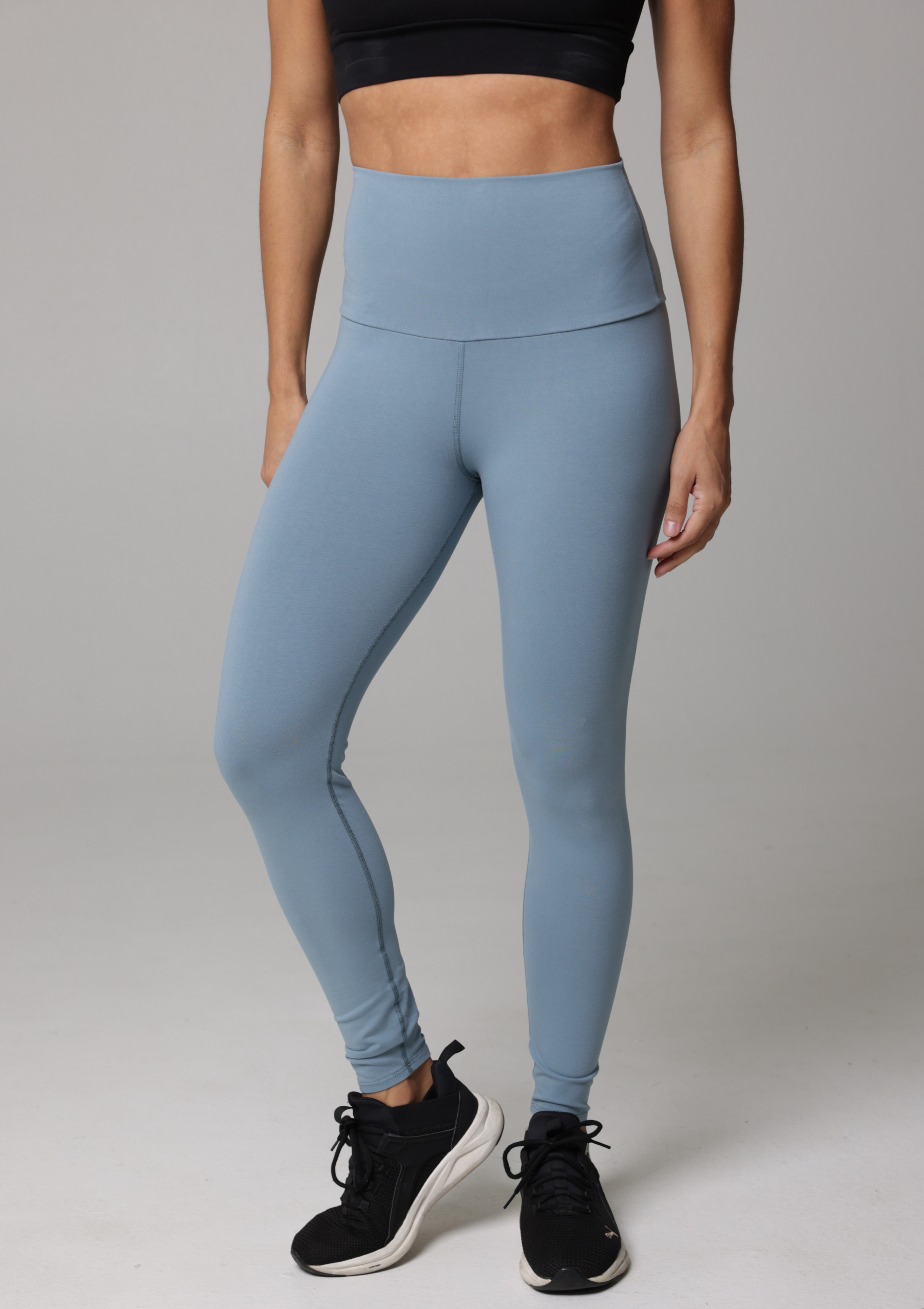
PureFlex Organic Cotton High Waist Leggings in Ocean Mist: 92% GOTS-certified organic cotton, 8% spandex, knit, sewn, and dyed in Los Angeles.
The consistency test
Think about how much care people already put into what enters their body. Filtered water. Organic produce. Reading ingredient labels on a protein bar. Swapping plastic food containers for glass. Some of us bought electric cars for the air. And then we train, which is the most body-respecting habit there is: we sweat to stay strong, mobile, and clear-headed.
Now look at what most of us sweat in. Petroleum-based fiber, worn skin-tight, for eight or ten hours a week, in exactly the hot, damp conditions that make fabric chemistry most mobile. Many people apply more scrutiny to a $4 snack than to the material their body spends a hundred sweaty hours a month wrapped in.

The PureFlex High Neck Racerback Bra: double-lined organic cotton for the garment that sits closest to sweating skin.
That isn't a reason to panic. It's a consistency question. If you already filter what you drink and check what you eat, extending the same standard to what you wear while you sweat is the logical next step, and it costs you nothing in performance to do it.
So what should you actually do?
You don't need to panic-purge your closet. A practical hierarchy:
- Prioritize what touches sweating skin the longest: leggings, bras, underwear, workout tops. This is where fabric choice matters most.
- Choose natural fibers where performance allows. GOTS-certified organic cotton is grown without synthetic pesticides and processed with restricted chemistry.
- Look for third-party verification, not vibes. "Eco" and "clean" are marketing words. GOTS certification and a published lab result are checkable claims.
- Wash the synthetics you keep less often, in cold water, ideally in a microfiber-catching bag. Better for the ocean and for the garment.
Where PuraKai fits
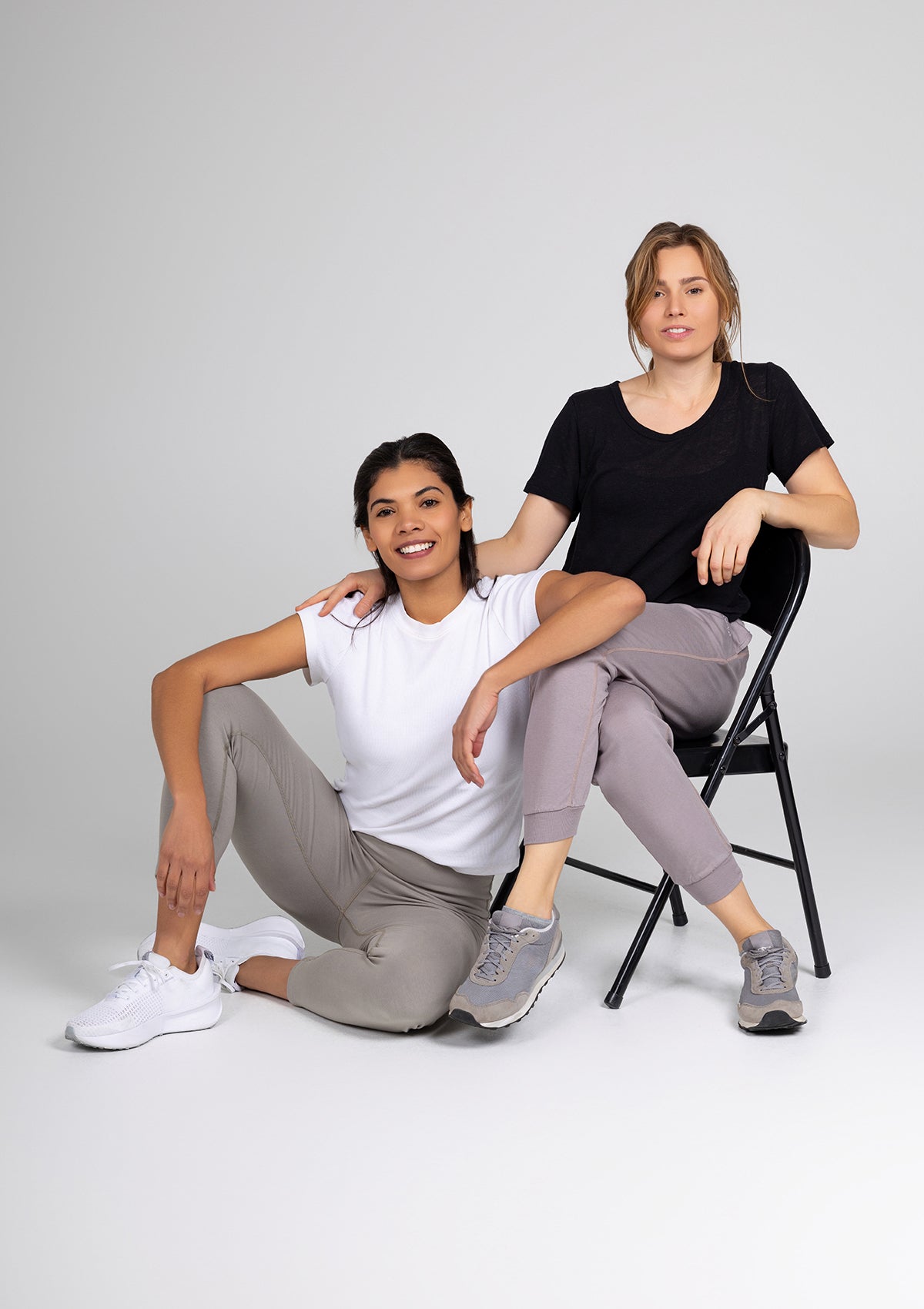
We make activewear from 92% GOTS-certified organic cotton with 8% spandex: enough stretch to perform, with a natural fiber doing the work against your skin. Everything is knit, cut, sewn, and dyed in Los Angeles, in our own facility, and we are a licensed California garment manufacturer (registration GA-LR-1001309619, verifiable in the state's public database). On PFAS we publish the number: an independent testing laboratory screened our organic cotton leggings fabric in October 2024 and found no PFAS detected, with total fluorine below 2 parts per million against a current industry threshold of 100 ppm. Read the report. If you're moving away from synthetics, organic cotton leggings and organic cotton activewear are the natural place to start.

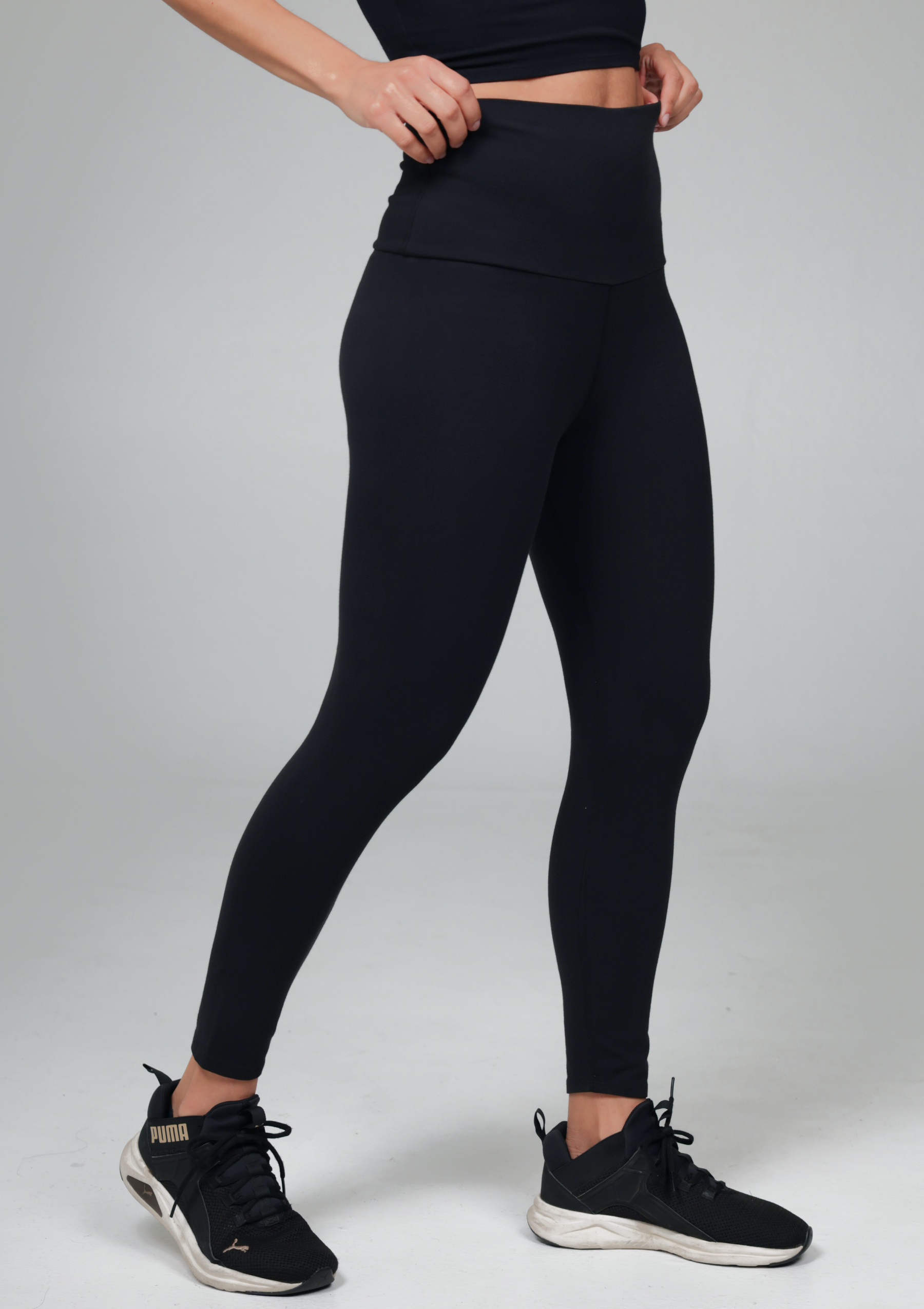
PureFlex Pocket Leggings: the same 92/8 organic cotton fabric, with pockets for the practical crowd.
FAQ
Is it OK to wear polyester every day?
For most people, yes. No acute harm has been demonstrated. The strongest cases for switching are tight-fitting sweat-zone garments, sensitive skin, and reducing microplastic shedding.
Is polyester safe for sensitive skin or eczema?
Often not ideal. Polyester traps heat and is colored with disperse dyes, a leading cause of textile contact dermatitis. Dermatologists commonly recommend breathable natural fibers like cotton for eczema-prone skin.
What about recycled polyester?
Better for the planet's raw-material footprint, identical on skin contact, microplastic shedding, and finishes. Recycled does not mean non-toxic.
Is cotton actually better for workouts?
Modern organic cotton blends (like our 92/8 cotton-spandex PureFlex fabric) stretch, breathe, and hold less odor than polyester. Pure 100% cotton holds more moisture in very sweaty sessions, which is why we blend in 8% spandex for performance pieces.
Is organic cotton really different from regular cotton?
On skin they feel similar; the difference is upstream. Organic certification means no synthetic pesticides or fertilizers in the field and restricted chemistry in processing, which supports living soil and the insect life around it. Conventional cotton is one of the more pesticide-intensive crops grown.
How do I know if clothing has PFAS?
You can't tell by look or feel. Look for brands that publish an actual lab result, with the article tested, the date, the method, and the detection limit, rather than a "PFAS-free" hangtag with nothing behind it.

Leave a comment
This site is protected by hCaptcha and the hCaptcha Privacy Policy and Terms of Service apply.