

Article: Non-Toxic Leggings: What the Label Can and Cannot Prove

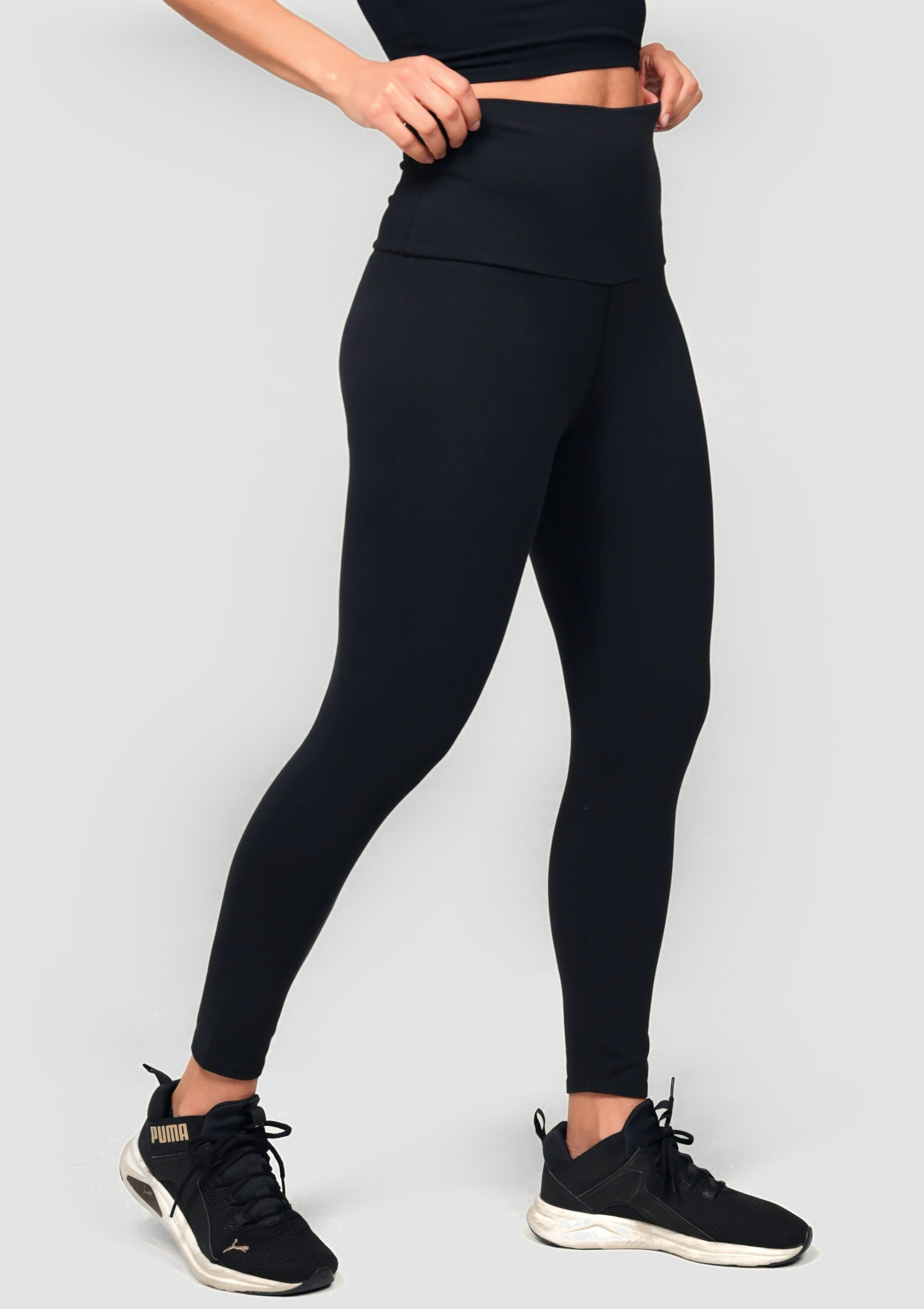
Non-Toxic Leggings: What the Label Can and Cannot Prove
The short answer: A label that says non toxic leggings does not prove that the leggings contain no hazardous substances. The phrase has no single test method, chemical list, detection limit, or certification scope built into it. Better evidence includes a complete fiber label, a certification whose scope is clear, a published restricted-substance standard, and a dated laboratory report that identifies the sample and method. Even then, each document proves only what it actually covers.
Shoppers are often asked to compare unlike claims. Organic fiber, a safety standard, a manufacturing location, and a negative PFAS screen are useful facts. They are not interchangeable. None proves that a garment is chemical free or promises a health outcome.
Why the Non Toxic Leggings Label Falls Short
Non toxic is a broad marketing phrase, not a complete description of a textile. Toxicity depends on the substance, dose, route, and length of exposure. A garment also passes through many stages, including fiber production, knitting, dyeing, finishing, sewing, packing, and shipping. A claim about one stage cannot silently cover all the others.
Federal textile rules provide a useful starting point, but they do not make non toxic a defined textile category. The Federal Trade Commission requires most covered apparel labels to state generic fiber names, percentages by weight, country of origin, and the responsible company or its registered identification number. Those disclosures help shoppers check what a garment is made from and where it was processed or manufactured. They do not normally list dyes, processing aids, or finishes.
The phrase healthy yoga pants has the same problem. It suggests a benefit without identifying the evidence. A more useful question is specific: What fibers are present? Was a water-resistant or stain-resistant finish added? What does the certification cover? Was the actual fabric or finished article tested?
Three Different Kinds of Evidence
Fiber disclosure answers what the garment is made from by weight. A label reading 92% organic cotton and 8% spandex is more informative than cotton-majority or natural. It also concedes the synthetic stretch fiber. Fiber percentages do not disclose every dye, finish, residue, or accessory.
Certification answers whether a stated scope met a standard. The scope may cover an input, a fabric, a processing facility, or a finished article. Look for the certified entity, certificate or license number, product scope, and validity period.
Laboratory testing answers a defined question about a defined sample. A report should name the article tested, analyte or screening measure, method, result, units, reporting or detection limit, laboratory, and date. A test for total fluorine does not answer the same question as a targeted test for named PFAS. A negative result means the measured amount was below the stated limit. It does not mean absolute zero.
This is why lab tested leggings can still be a vague claim. Without the report, a shopper cannot tell whether the lab tested the finished garment, one fabric, a component, or a supplier sample. The shopper also cannot see which substances were included.
What Fiber Certification Can and Cannot Prove
The Global Organic Textile Standard covers textile processing after organic fiber production. It sets requirements for approved chemical inputs, environmental practices, social criteria, and product labeling within a certified chain. The current GOTS standard includes prohibited and restricted chemical groups and finished-product residue limits.
That is stronger evidence than the word organic by itself, but scope still matters. A garment made with GOTS-certified organic cotton fabric is not automatically a GOTS-certified finished garment. Product-level representation requires the applicable processors and product to be inside the certified chain and properly authorized for labeling.
GOTS also does not promise a textile with no chemicals. Textile processing uses chemistry, including dyes and cleaning agents. A restricted-substance program controls which inputs may be used and sets limits. It does not turn a garment into a substance-free object.
OEKO-TEX STANDARD 100 answers a different question. The official OEKO-TEX description says a labeled article and its components are tested against a list of more than 1,000 substances, with stricter requirements for more intensive skin contact. That is finished-article evidence tied to a certificate. It does not certify organic fiber or tell the shopper where the sewing occurred.
Can a Lab Test Prove PFAS Free Leggings?
No single test can support an unlimited claim about every chemical in every unit a brand sells. PFAS is a large chemical class, and different methods answer different questions. Targeted analysis looks for named compounds on a list. A total fluorine screen measures fluorine from all sources in the sample. It can set a useful upper bound, but it does not identify a particular PFAS compound.
Context also matters. The US Environmental Protection Agency identifies stain-resistant and water-resistant clothing among possible PFAS-containing consumer products. That supports asking about performance finishes. It does not support assuming that every polyester, nylon, or spandex garment has a fluorinated finish.
A careful test claim should therefore stay attached to five details: the exact sample, the screening or analyte, the method, the limit, and the date. If a report covers one fabric article, it should not be stretched to cover trims, prints, future production, or an entire catalog. The lab's own limitations matter as much as the headline result.
What the Health Evidence Supports
PFAS exposure is a legitimate public-health concern. EPA reports that exposure to certain PFAS may be associated with reproductive effects, developmental effects, reduced immune response, increased cholesterol, and some cancers. EPA also says research is continuing on how different PFAS and exposure levels affect health.
That evidence does not show how much exposure comes from one pair of leggings. Drinking water, food, dust, workplaces, and consumer products can all contribute. Presence in a textile is not an absorbed dose, and a negative fabric screen does not prove that wearing it prevents harm.
The calm response is to ask for better product evidence without turning uncertainty into fear. A disclosed fiber blend, fewer claimed performance finishes, a clearly scoped certification, and a readable test report give shoppers more to evaluate. They do not justify a medical promise.
A Label-Reading Checklist
- Read every fiber percentage. Check the full blend, not the largest fiber named on the product page. Stretch leggings usually include spandex or another elastic synthetic fiber.
- Ask about finishes. Water-resistant, stain-resistant, wrinkle-resistant, and odor-control claims describe separate treatments. Ask what chemistry creates the claimed function.
- Check certification scope. Find out whether the certificate covers the fiber, fabric, facility, or finished product. Look for a valid certificate or license rather than a logo alone.
- Open the test document. Confirm the sample, laboratory, method, analyte or screen, units, limit, result, and date. Check whether the report includes a limitation or sampling disclaimer.
- Verify the manufacturing claim. Country of origin is required information. A brand that names the cutting, sewing, knitting, and dyeing locations provides more useful detail than a broad designed-in statement.
How PuraKai Documents Its Organic Cotton Leggings
We make our garments in our own Los Angeles facility, where design, cutting, sewing, and finishing happen under one roof. Los Angeles partners handle knitting and garment dyeing. That local chain gives us direct production oversight and avoids the distance involved in imported sewing. PuraKai is a father-and-daughter founded small business with no venture capital or private equity. Shoppers have left 140 reviews on the High Waist Pocket Leggings alone, averaging 4.5 stars.
Our PureFlex activewear fabric is 92% organic cotton with 8% spandex. The activewear and basics are made with GOTS-certified organic cotton, stated as a fabric-level claim. The cotton is grown in Texas, Turkey, and India. We publish the blend because organic cotton leggings still need a stretch fiber to recover their shape.
On PFAS, we publish the test result rather than a blanket claim: Applied Technical Services independently tested our organic cotton leggings fabric and found no PFAS detected, measuring total fluorine at below 2 parts per million against a current industry threshold of 100 ppm.
The ATS report, reference 435623 and dated October 21, 2024, covers one organic cotton leggings main-fabric article. The lab used ASTM D4327-17 and EN 14582:2016 as guides for the total fluorine measurement. Its result and reporting limit apply to that sample. The report expressly says it is not a guarantee for the entire material lot.
Shoppers can start with the best-selling organic cotton High Waist Leggings, followed by the organic cotton High Waist Pocket Leggings, in the organic cotton leggings collection. The wider women's organic cotton activewear collection includes shorts and fitted tops for sets. For more detail on the chemical class and the limits of clothing claims, read what PFAS means in clothing.
Frequently Asked Questions
Are Non Toxic Leggings Chemical Free?
No. Non toxic does not identify a universal chemical list, test, or limit, and all textiles are made of chemicals in the scientific sense. Look for fiber percentages, finish disclosures, scoped certifications, and test reports instead of treating the phrase as proof.
How Can I Find Leggings Without PFAS?
Ask whether a water-resistant or stain-resistant finish was added, then request the test report. Check what was sampled, whether the method was targeted analysis or a fluorine screen, and what reporting limit applied. A result below a stated limit is useful evidence for that sample, not a permanent guarantee for every garment.
Are Organic Cotton Leggings PFAS Free?
Organic fiber content alone cannot prove that. Finishes and dyes are applied after the fiber is grown. GOTS-certified processing adds controls on chemical inputs and residues, while a properly scoped lab report can answer a separate PFAS question about the tested sample. The strongest evidence uses both and states their limits plainly.