
PuraKai Named to Mamavation's Best Activewear List

PuraKai is a family-owned brand started in 2012 by a father and daughter who believed the clothing they wore should help protect the ocean they spent their lives in. From day one we have worked only with organic cotton, and every year since, a portion of our sales has gone to ocean conservation. Today we make our own organic cotton basics and activewear from GOTS-certified organic cotton in our licensed apparel facility in Los Angeles. Read our story and learn more about our fabrics.
Mamavation is a consumer-advocacy site that sends everyday products to an independent, EPA-certified lab to look for chemicals of concern. In its latest activewear investigation, it tested 42 pairs of leggings and yoga pants for PFAS, the "forever chemicals" sometimes used in water- and stain-resistant finishes. 10 of the 42 pairs came back with detectable organic fluorine, all of them synthetic or man-made fabrics. None of the 5 organic cotton pairs did.
PuraKai’s organic cotton leggings came back non-detect, and that result earned PuraKai a place on Mamavation’s Best Activewear list. Below: why so many people are switching from synthetic to organic cotton, what PFAS are, and what you’ll notice when you make the switch.
42
pairs of leggings and yoga pants tested
10 of 42
pairs had detectable fluorine
0 of 5
organic cotton pairs had detectable fluorine
In this article
Why are so many people switching from synthetic to organic cotton activewear?
Most leggings sold today are made mainly of polyester or nylon. We read more than 780 written reviews of our leggings and shorts to see what buyers actually say after switching. Four themes came up most, and PFAS is a fifth reason many people give.
- Fit. About a third of reviews talk about fit: a waistband that stays up, a shape that holds through a workout, and leggings that flatter.
- Comfort. More than a quarter call them comfortable, often "the most comfortable" leggings the reviewer owns.
- Wearing cotton instead of plastic. Nearly 1 in 4 mention organic cotton, natural fiber, or being glad to stop wearing polyester.
- Softness. Almost 1 in 5 describe the fabric as soft.
- PFAS. Some people want activewear that tests clean for PFAS, the "forever chemicals" sometimes used in water- and stain-resistant finishes. See what Mamavation found below.
"These are replacing my other leggings! I have been looking for clothing with less synthetic materials and leggings are hard to find."
Ash M., verified buyer, High Waist Leggings
The fabric comparison itself, workout by workout, is covered in our guide to cotton and synthetic workout clothes.
What did Mamavation test, and what did it find?
Mamavation's activewear PFAS guide lists 42 pairs, mostly workout leggings and yoga pants. Each pair was screened for fluorine, a marker for PFAS, at a detection limit of 10 parts per million (ppm).
10 of the 42 pairs had detectable organic fluorine, and all 10 were synthetic or man-made fabrics. All 5 organic cotton leggings in the test, including ours, came back non-detect.
In the September 2026 update, Mamavation added PuraKai leggings with a result of non-detect for total fluorine. PuraKai is one of seven brands on its Best Activewear list. Mamavation ranks products. It does not certify them.
Disclosure: Mamavation invited PuraKai to send a pair for testing, and we did. Our listing carries no affiliate link or discount code. Mamavation's results lists need a free account to view, so we have set out the result here.
What are PFAS, and why do they matter for activewear?
PFAS (per- and polyfluoroalkyl substances) are a large family of human-made chemicals. They are often called forever chemicals because they break down very slowly. In clothing they are mostly used for water, stain or sweat resistance.
The CDC's toxic substances agency says nearly all people in the U.S. have PFAS in their blood (ATSDR). The EPA says exposure to certain levels of some PFAS may affect the immune system, cholesterol, hormones and child development (EPA). People are exposed through drinking water, food, dust, air and everyday products, so clothing is one source among many.
Activewear gets attention because it sits against warm, damp skin for hours. A 2024 University of Birmingham study using lab-grown models of human skin found that 15 of the 17 PFAS it tested were absorbed in meaningful amounts (Ragnarsdóttir et al., Environment International).
A skin model is not the same as wearing leggings, and no study has shown that a particular pair of leggings causes harm. It is still a fair reason to choose fabric that tests clean.
What will you notice when you switch?
How it feels
Organic cotton with spandex feels like a soft, substantial knit that stretches with you. It has a matte look rather than a sheen. Many people notice the difference in the first hour of wear, and again at the end of a long day.

Fit and coverage
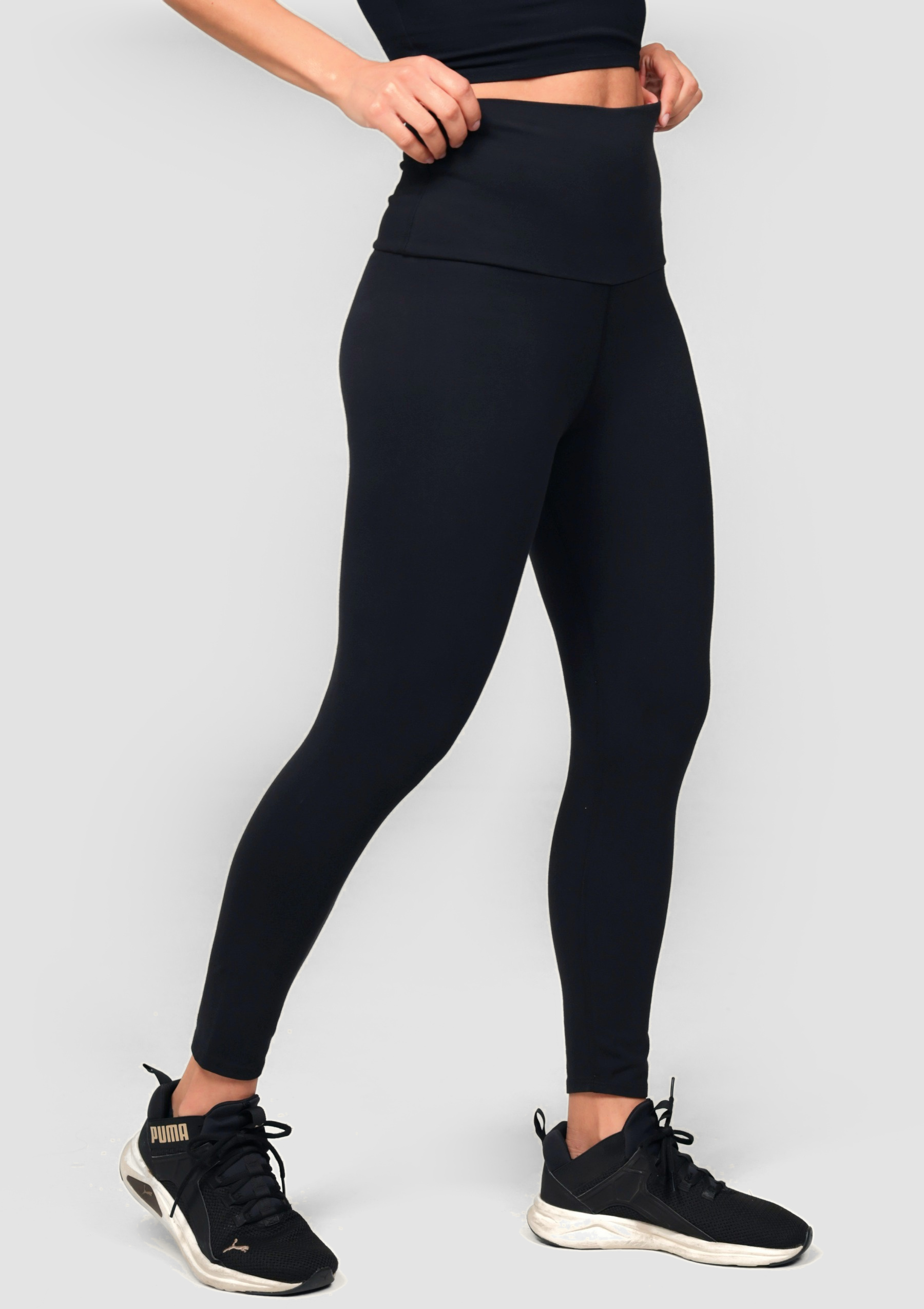
A wide, soft waistband holds leggings in place without an elastic band digging in. Our PureFlex fabric is designed for coverage, with reduced sheerness in every colorway.

Care
Wash cold, turn leggings inside out and skip fabric softener. Hang them or tumble on low. Follow the care label on each piece.
What do customers say after switching?
★★★★★ Verified reviews from customers who switched from synthetic
Swipe for more reviews →
Joy R. ✓ Verified
1/13/2026
★★★★★
I’ve been really looking forward to making the switch from polyester to cotton leggings and I’m thrilled to have my first pair arrive. Very comfortable.
 PureFlex Organic Cotton High Waist Leggings
Carol H. ✓ Verified
10/19/2025
★★★★★
They feel so different from my nylon spandex leggings. Purakai are soft, stretchy, but most of all breathable. … Bonus, they are made in the USA!
PureFlex Organic Cotton High Waist Leggings
Ash M. ✓ Verified
1/22/2025
★★★★★
These are replacing my other leggings! I have been looking for clothing with less synthetic materials and leggings are hard to find. These are just the right thickness, with no see through, and they stretch without being restrictive.
PureFlex Organic Cotton High Waist Leggings
Gina K. ✓ Verified
4/11/2026
★★★★★
These are the MOST COMFORTABLE leggings I have ever worn!! They were great at the gym and I’m happy to be wearing a natural fabric and not polyester!!
PureFlex Organic Cotton High Waist Leggings
Melissa L. ✓ Verified
4/6/2026
★★★★★
I’m so excited! I finally found natural leggings that are thick enough to pass the squat test!
 PureFlex Organic Cotton High Waist Pocket Leggings
Curry M. ✓ Verified
1/28/2026
★★★★★
I live in Texas and it’s so hot n the summer that synthetics just don’t cut it. The fit is great…
 PureFlex Organic Cotton High Waist Shorts
How do you start the switch?
- Replace the pair you wear most. One pair of leggings worn three times a week will tell you more than a whole new wardrobe.
- Add shorts for warm days. High-waist shorts cover hot workouts and layer under dresses.
- Retire synthetics as they wear out. There is no need to throw away clothes that still work.
How is PuraKai different?
Our PureFlex activewear is made from 92% GOTS-certified organic cotton and 8% spandex. It is 100% made in the USA and sewn in Los Angeles.
PureFlex activewear is PFAS-free. Independent lab tests found no PFAS. In October 2024, Applied Technical Services tested our organic cotton leggings fabric and found total fluorine not detected, below 2 ppm; you can read ATS report 435623 in full.
Mamavation's 2026 test of our leggings was non-detect at 10 ppm. Every PureFlex piece uses the same fabric, made through the same process with the same vendors, and we use no DWR (durable water repellent) or fluorinated finishes.
For scale: the industry threshold most often cited is 100 ppm total organic fluorine, the limit California has applied to new apparel since January 1, 2025 under AB 1817. California lowers that limit to 50 ppm on January 1, 2027. Our ATS result was below 2 ppm.
How can you check any brand's PFAS claims yourself?
Labels rarely list chemical finishes, so a few questions do most of the work. Use these for any brand, including ours.
- Is there a lab report you can read? Look for the lab's name, the date, the report number and what was sampled.
- What was measured? A total fluorine test screens for the whole PFAS family. A test for a short list of named PFAS can miss others.
- What was the detection limit? "Not detected" means below that number. Lower is more sensitive.
- Does the product mention water, stain or odor resistance? Ask how that finish is made.
- Is a certification claim checkable? Look up the certificate in the certifier's public database.
- Be careful with vague words. "Non-toxic" and "clean" have no test method behind them. Our guide Non-Toxic Leggings: What the Label Can and Cannot Prove walks through each question.
Which PuraKai pieces should you try first?

 PureFlex Organic Cotton High Waist LeggingsA high-rise pair and the easiest first swap for everyday wear and studio classes.Shop now →
 PureFlex Organic Cotton High Waist Pocket LeggingsIn the PureFlex fabric Mamavation tested, with pockets for a phone and keys.Shop now →
 PureFlex Organic Cotton High Waist ShortsFor hot-weather workouts.Shop now →
Or browse every length and rise in our organic cotton leggings collection.
Frequently Asked Questions
Is PuraKai on Mamavation's Best Activewear list?
Yes. Mamavation's September 2026 update lists PuraKai leggings under Best Activewear, with a result of non-detect for total fluorine at a 10 ppm detection limit.
Is PuraKai activewear PFAS-free?
Yes. PureFlex activewear is PFAS-free, confirmed by independent lab tests: our ATS lab report 435623 (below 2 ppm total fluorine) and Mamavation's September 2026 test of our leggings (non-detect total fluorine).
Are all synthetic leggings treated with PFAS?
No. In Mamavation's guide, 10 of the 42 pairs had detectable fluorine, all of them synthetic or man-made. None of the 5 organic cotton pairs did. The only way to know about a specific product is a test result for it.
What does "non-detect" mean on a PFAS test?
It means the lab found no fluorine at or above its detection limit. Mamavation's limit was 10 ppm. The ATS test on our fabric used a 2 ppm limit.
Is organic cotton good for working out?
Yes. Our customers wear PureFlex for yoga, Pilates, lifting, the gym and everyday wear, and the most common words in their reviews are fit, comfort and softness.
How do I wash organic cotton activewear?
Wash cold, inside out, without fabric softener, then hang dry or tumble on low. Follow the care label on each piece.