
Natural-Fiber Leggings: What Counts and Where Stretch Comes From
Natural fiber leggings are leggings made mainly from fibers that exist in nature, such as organic cotton, wool, linen, or hemp. Most fitted pairs are not completely natural. They often add a smaller amount of spandex for stretch and shape recovery. A clear example is 92% organic cotton and 8% spandex. That is accurately described as organic-cotton-majority or mostly natural fiber leggings, but not all-natural or plastic-free.
What Counts as a Natural Fiber?
The phrase sounds simple, but product pages use it loosely. The Textile Fiber Products Identification Act gives a useful baseline. It defines a natural fiber as a fiber that exists as a fiber in its natural state. Cotton and hemp come from plants. Wool comes from an animal. Flax is the plant fiber used to make linen.
A manufactured fiber is different. The same law defines it as a fiber made through manufacturing from a substance that was not already a fiber at some point in the process. This group includes two categories that shoppers often mix together:
- Manufactured cellulosic fibers start with plant cellulose, often wood pulp. The cellulose is dissolved and regenerated into a new fiber. Lyocell, modal, and viscose are examples. Textile Exchange explains this process and classifies these as manmade cellulosic fibers.
- Synthetic fibers are manufactured polymers. Polyester, nylon, and spandex fall here. The federal definitions identify polyester as a synthetic polymer, nylon as a synthetic polyamide, and spandex as a fiber made from at least 85% segmented polyurethane.
This classification does not make every natural fiber good for every use, or every manufactured fiber bad. It answers a narrower question: what kind of fiber is on the label? Lyocell has plant-derived cellulose, but it is still a manufactured fiber. Spandex is synthetic even when it makes up a small share of a plant-fiber garment.
Why Fitted Leggings Usually Need More Than One Fiber
Stretch and recovery are related, but they are not the same. Stretch is how far a fabric can extend. Recovery is how well it returns toward its earlier dimensions after the force is removed. A fabric can feel flexible yet slowly become loose at the knees or waistband if its recovery is limited.
Fabric construction provides some give. Knitted fabric is made from connected loops, so those loops can change shape as the material moves. Yarn choice, knit structure, fabric weight, and finishing all affect the result. A fiber percentage alone cannot tell you exactly how stretchy a finished pair will feel.
Spandex adds deliberate elastic recovery. It can do a large mechanical job at a small percentage of total fiber weight. The FTC even uses spandex for elasticity as its example of a fiber with a clear functional role at less than 5%. Cotton Incorporated also notes that cotton can be blended with spandex to improve stretch and recovery.
That is why many natural fabric workout clothes use a high share of cotton with a lower share of spandex. The cotton-majority portion can define most of the fabric by weight and feel. The spandex helps a close-fitting garment move, hold at the waist, and return toward its fitted shape. The honest description is a blend, not a promise that the leggings contain no synthetic fiber.
Natural Fiber Leggings Label-Reading Table
| Label name | Fiber category | What the name tells you | What to check for stretch |
|---|---|---|---|
| Cotton | Natural plant fiber | The fiber exists in the cotton plant. Organic is a separate sourcing and certification claim. | Check the knit and any spandex percentage. Cotton alone does not promise close-fitting recovery. |
| Wool | Natural animal fiber | The label identifies an animal fiber covered by specific federal wool-labeling rules. | Check the knit, garment weight, and whether nylon or spandex is also listed. |
| Linen | Natural plant fiber | Linen is the textile name used for flax fiber. | The word linen does not establish stretch. Read the full blend and assess the construction. |
| Hemp | Natural plant fiber | The fiber comes from the hemp plant. | Look for spandex or another elastic fiber if the garment is meant to fit closely. |
| Lyocell | Manufactured cellulosic fiber | Plant cellulose is dissolved and regenerated into fiber. The federal fiber definitions place lyocell within the rayon category. | Lyocell is not itself a stretch-fiber claim. Check the knit and the rest of the blend. |
| Polyester | Manufactured synthetic fiber | The label identifies a synthetic polymer fiber. | Polyester content alone does not state recovery. Many fitted fabrics also list spandex. |
| Nylon | Manufactured synthetic fiber | The label identifies a synthetic polyamide fiber. | Nylon content alone does not state recovery. Read the percentage and full blend. |
| Elastane or spandex | Manufactured synthetic stretch fiber | These are accepted names for the same fiber class. The FTC recognizes elastane as the ISO name for spandex. | This is the clearest label signal that elastic stretch and recovery were designed into the fabric. |
How to Read the Percentages
For clothing covered by the US textile rules, the label lists generic fiber names and percentages by weight in descending order. The FTC label guide shows examples such as 80% cotton and 20% spandex. Weight is the key word. A label does not tell you the number of threads, visible surface share, or which fiber touches every part of the skin.
Start with the first fiber because it is the largest share by weight. Then read every remaining fiber and ask what role it may serve. In plant fiber leggings, a small spandex percentage often provides elasticity. In another pair, polyester or nylon may be the main fiber rather than a minor addition.
Do not use one cutoff as a universal definition. There is no general federal label category called natural fiber leggings with a fixed minimum natural percentage. A phrase such as mostly natural fiber leggings should be backed by the actual numbers. A 92% organic cotton blend makes that basis clear. A product described only as cotton blend does not.
What a 92/8 Blend Does and Does Not Mean
A label reading 92% organic cotton and 8% spandex says that organic cotton accounts for most of the listed fiber weight. It also discloses a meaningful synthetic component. It is fair to call this organic-cotton-majority natural fiber activewear. It is not fair to call it all-natural, 100% organic cotton, synthetic-free, or plastic-free.
The ratio cannot predict the whole wearing experience. Two fabrics with the same percentages can differ because of yarn, knit density, fabric weight, waistband design, and finishing. Percentages also do not prove where a garment was made or whether a certification applies to the fiber, fabric, or finished product.
Use the percentage as the start of the investigation. Then check construction, manufacturing location, certification scope, and any published testing. For a broader comparison of fiber performance, read is polyester bad for you.
How PuraKai Balances Organic Cotton and Spandex
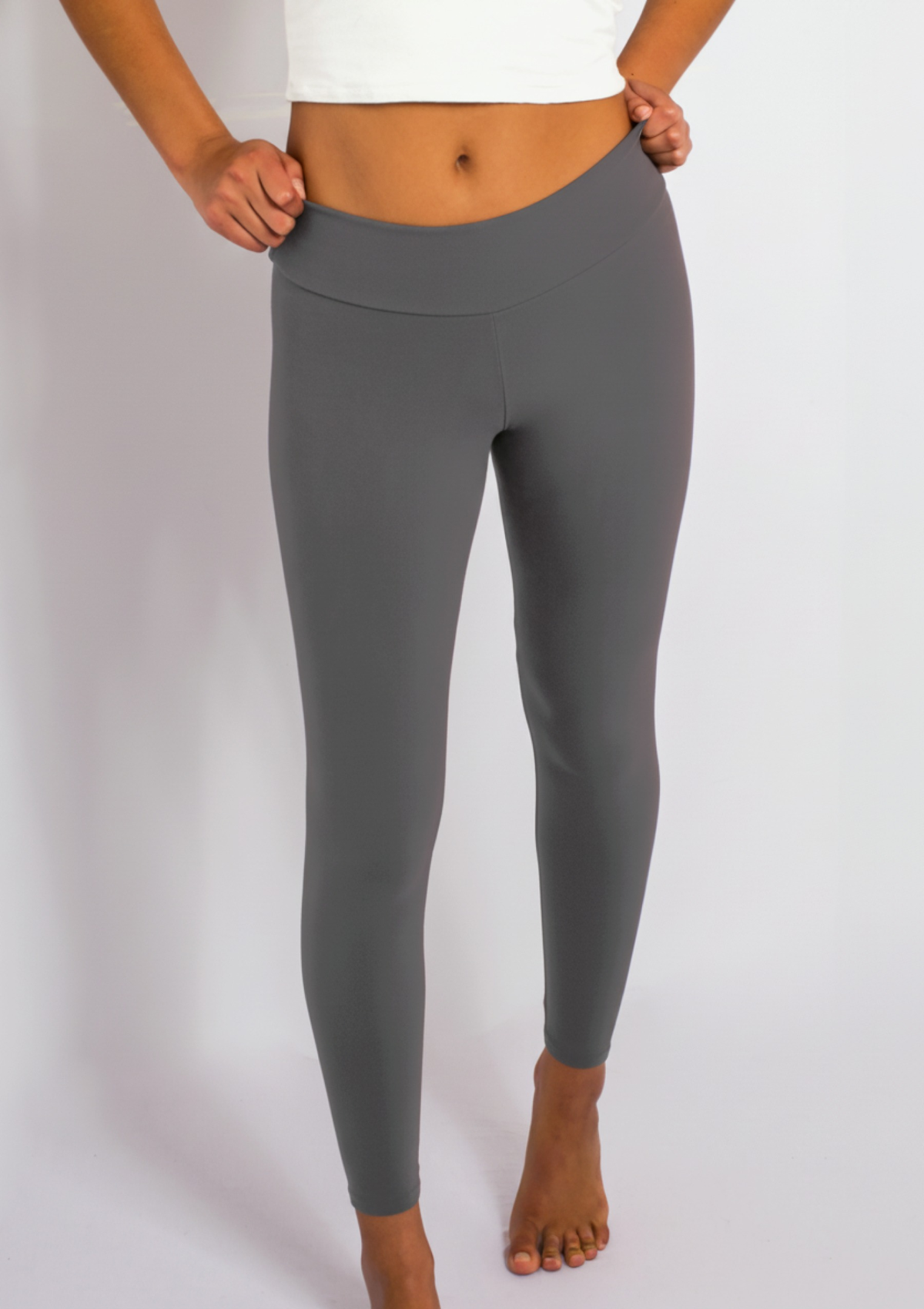
Our PureFlex fabric is 92% GOTS-certified organic cotton and 8% spandex. We describe it as organic-cotton-majority, never all-natural or plastic-free. The blend is used across our organic cotton leggings and women's organic cotton activewear.
We design, cut, sew, and finish the garments in our own Los Angeles building. Los Angeles partners handle knitting and garment dyeing. The organic cotton is grown in Texas, Turkey, and India. PuraKai is a father-and-daughter founded small business, independent since 2012, with no venture capital or private equity.
Our organic cotton leggings fabric is PFAS-free: Applied Technical Services independently tested it and found no PFAS detected, measuring total fluorine at below 2 parts per million against a current industry threshold of 100 ppm (ATS report 435623, October 2024). Mamavation's September 2026 activewear study found non-detect total fluorine in our leggings.
A Simple Shopping Check
- Read the full fiber label, not only the largest word on the product page.
- Separate natural fibers, manufactured cellulosics, and synthetic fibers.
- Look for the exact percentages and identify the likely stretch fiber.
- Treat mostly natural as a measurable description, not a synonym for all-natural.
- Check where the garment was made and what any certification actually covers.
Frequently Asked Questions
Are natural fiber leggings 100% natural?
Not always. The phrase may describe leggings made mainly from organic cotton, wool, hemp, or another natural fiber while still containing spandex. Check the percentages. If any spandex, polyester, or nylon is listed, the garment is a blend and should not be called all-natural or plastic-free.
Is lyocell a natural fiber?
Lyocell is plant-derived, but it is classified as a manufactured cellulosic fiber. Its cellulose feedstock is dissolved and regenerated into fiber. That places it between simple natural-fiber and synthetic-fiber descriptions, but legally and technically it is manufactured rather than a fiber that exists in its finished form in nature.
Why do organic cotton leggings contain spandex?
Spandex helps fitted fabric stretch and recover after movement. Organic cotton can make up most of the fiber weight, while a smaller spandex share supports a close fit at the knees, seat, and waistband. The trade-off is clear: the garment is organic-cotton-majority, but it is not 100% organic cotton or free of synthetic fiber.

Leave a comment
This site is protected by hCaptcha and the hCaptcha Privacy Policy and Terms of Service apply.