
Do Linen Leggings Work? Linen vs. Organic Cotton for Movement
Linen leggings can work, but most woven linen does not stretch or recover enough for a close, stay-put fit. Linen is breathable and strong, yet the flax fiber itself has low elongation. A linen knit, a loose linen yoga pant, or a linen blend with stretch fiber can move better. For fitted activewear, organic cotton leggings with a small amount of spandex are usually the more practical natural-fiber-rich choice.
Can Linen Leggings Actually Work?
The answer depends less on the word linen and more on how the fabric is built. Linen is made from flax. Published textile data puts flax fiber elongation at about 2 to 3 percent before breaking. The same reference describes low elasticity and moisture regain around 12 percent. That combination helps explain linen's crisp feel and limited natural give. It also explains why a traditional linen trouser behaves very differently from a fitted legging. See the published flax property table.
Fitted leggings need to expand through the hips, knees, and calves, then return close to their original dimensions. Stretch without recovery is not enough. Fabric that expands but does not return can loosen at the knees, seat, or waistband. Utah State University Extension treats stretch and recovery as separate qualities and notes that a knit that does not fully recover may sag or stretch out during wear. Its knit fabric guide also shows why shoppers should check both.
Pure woven linen usually falls short of that fitted-activewear job. It can still make an excellent warm-weather pant. A loose cut gives the body room to bend without asking the cloth to stretch much. If a product called a linen legging fits close and moves like conventional activewear, look at the full fiber label and construction. The performance may come from knit loops, an elastic waistband, a stretch panel, added spandex, or a combination of these.
A Linen Pant and a Linen Legging Are Not the Same Product
Product names are inconsistent. Some stores use linen yoga pants for wide-leg, straight-leg, or drawstring trousers meant for light movement and casual wear. These can be comfortable because the silhouette supplies room. They do not need the fabric to stretch around every joint.
A true legging is close from waist to ankle or calf. It is usually cut smaller than the body area it covers, so the fabric must stretch to fit. It also needs enough recovery to hold that fit through repeated steps, bends, and squats. A narrow woven linen pant may look like a legging in a product photo, but darts, a zipper, a relaxed knee, or extra ease can make it function as a trouser.
Knit Versus Weave Matters More Than the Fiber Name
Woven fabric interlaces warp and weft yarns. Knit fabric forms connected loops. The George Washington University Textile Museum explains that looping gives knit fabric the ability to stretch, which suits close-fitting clothing. Its textile structure guide contrasts that looped form with woven sets of warp and weft yarns.
This does not mean every knit is stretchy enough for leggings or every woven is rigid. Stitch type, yarn, density, and any elastic fiber all change the result. CottonWorks notes that knits usually conform more easily than stable woven constructions because their intermeshed loops can move. Its knit basics reference lists leggings and sports bras among common knit uses.
A linen jersey may therefore move better than a plain-weave linen made from the same fiber. Even then, linen's low elongation can limit the range and recovery. A maker may blend linen with organic cotton for a softer hand or add spandex for snap-back. A blend is not a flaw. It is a design choice that should be disclosed with exact percentages.
Linen Versus Organic Cotton Leggings for Movement
For stretch and recovery, construction and elastic content decide the winner. Woven linen without stretch fiber is best for looser shapes. An organic cotton knit can stretch through its loop structure, but a close legging usually benefits from added spandex. Research on cotton and spandex knits shows that spandex settings, yarn loop length, and processing all affect recovery. That is why two fabrics with the same fiber percentages can still perform differently. See the North Carolina State University textile study.
For abrasion, avoid judging from fiber strength alone. Flax is a strong fiber, but the finished garment's resistance to rubbing depends on weave, yarn, density, weight, and finish. A 2024 study of hemp and linen fabrics found that weave had a major effect on tear and abrasion results. The useful shopping question is how the specific fabric was tested or built, not whether linen or organic cotton wins in every form. Review the fabric construction study.
Drying is also more complex than a fiber slogan. Linen often appears in airy, light woven pants, while leggings tend to use denser knits. Those garments do not begin as equal samples. A Government of Canada textile report found that drying time across fabrics depended heavily on how much water the fabric initially held, with thickness playing a large role. So a light linen pant may dry sooner than a thick organic cotton legging, but the word linen does not predict the result by itself. The government drying report explains the test.
Feel is personal. Linen can feel cool, crisp, textured, or stiff depending on yarn and finish. Organic cotton knit is commonly chosen for a softer, closer feel. Neither fiber should be presented as inherently healthier for skin. Fiber content does not reveal every dye, finish, seam, detergent residue, or personal sensitivity. People with a known skin condition should use their own experience and medical guidance rather than a broad fabric claim.
For common silhouettes, linen is strongest in wide-leg pants, drawstring pants, jogger-like cuts, and other shapes with room. Organic cotton-majority knits with stretch fiber are better suited to high-waist leggings, pocket leggings, capris, bike shorts, and fitted yoga pants. Synthetic activewear can still dry quickly and provide strong recovery. Readers weighing that option can review what the evidence says about polyester without treating one fiber as right for every activity.
How to Shop for Linen Yoga Pants or Linen Activewear
Start with the activity. Loose woven linen can suit walking, travel, stretching, meditation, and restorative sessions. Deep squats, fast flows, cycling, and repeated floor work place more demand on stretch, recovery, seams, and abrasion.
- Read the full fiber percentages. Look for linen, organic cotton, spandex, elastane, or other fibers rather than relying on the product title.
- Check whether the fabric is knit or woven. If the page does not say, ask the seller.
- Look for a measured stretch claim in both directions and a recovery result after release.
- Study the silhouette. A wide leg, gusset, pleat, or roomy rise can provide movement without stretch.
- Check care directions and customer photos for knee bagging, seat growth, wrinkles, and changes after washing.
- Ask where the garment was made. Local production gives a brand more direct oversight and avoids the long freight route attached to imported production.
If a seller calls a garment 100% linen leggings, expect a different experience from elastic activewear. It may be a close-looking trouser, a flexible linen knit with modest give, or a product name used loosely. None of those choices is automatically bad. The label, construction, and intended activity should agree.
Does PuraKai Sell Linen Leggings?
No. As of August 2, 2026, PuraKai does not sell linen leggings or any linen product. We would rather state that clearly than use a linen search to disguise a different item. Our fitted alternative is PureFlex organic cotton activewear, made from 92% GOTS-certified organic cotton and 8% spandex. The 8 percent supplies the stretch and recovery needed for a close fit.
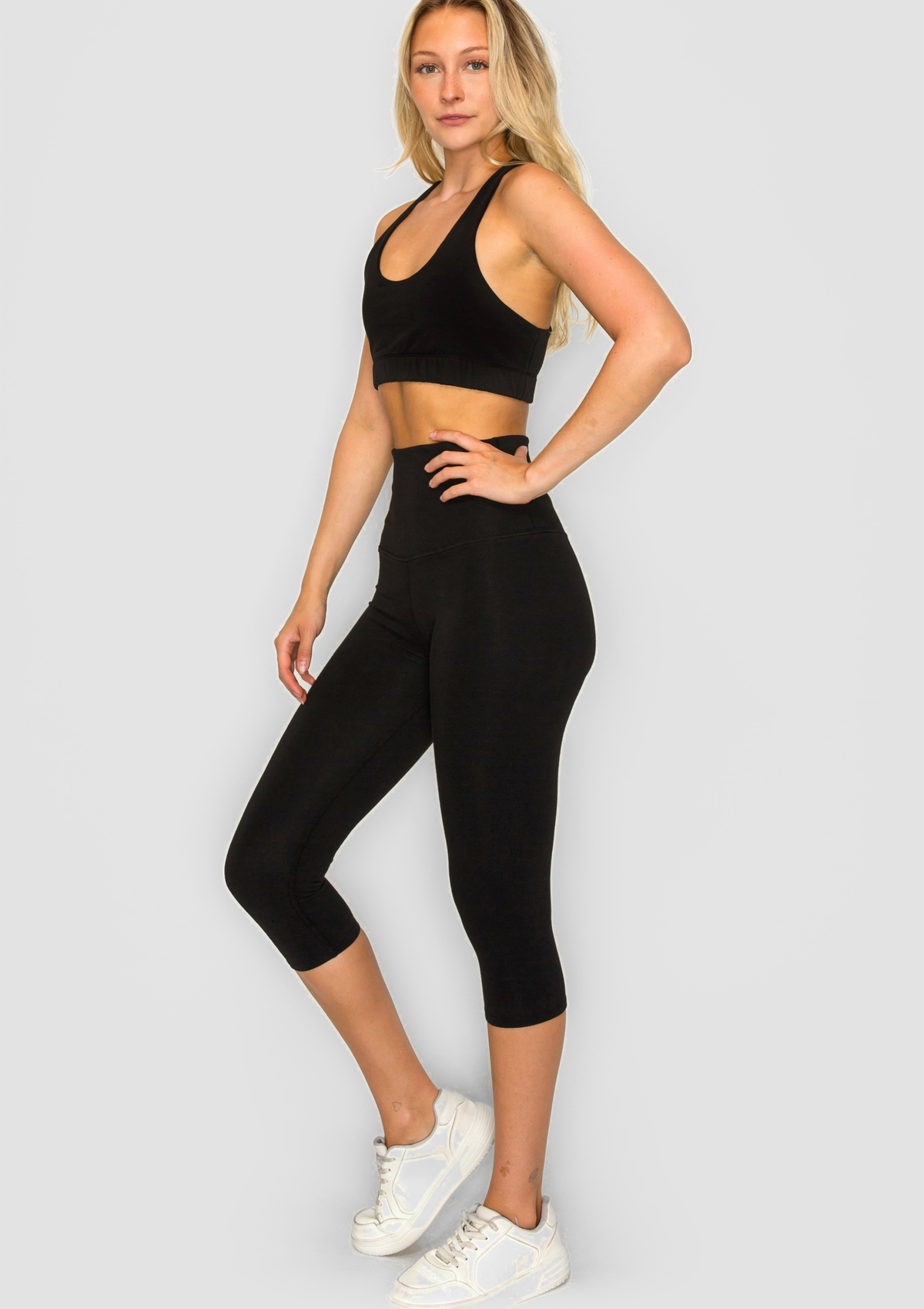
Start with our bestselling organic cotton leggings. The High Waist Leggings rank first by 90-day net sales, followed among full-length leggings by the High Waist Pocket Leggings. The wider women's organic cotton activewear collection adds organic cotton shorts, capris, fitted tops, and sports bras.
We design, cut, sew, and finish the garments in our own Los Angeles facility. Los Angeles partners handle knitting and garment dyeing. PuraKai is a father-and-daughter founded small business with no venture capital or private equity, and customer reviews provide a separate view of fit and quality.
Our organic cotton leggings fabric is PFAS-free: Applied Technical Services independently tested it and found no PFAS detected, measuring total fluorine at below 2 parts per million against a current industry threshold of 100 ppm (ATS report 435623, October 2024). Mamavation's September 2026 activewear study found non-detect total fluorine in our leggings.
Frequently Asked Questions
Are linen leggings good for yoga?
They can be good for gentle yoga if the cut allows movement. Loose linen yoga pants suit restorative practice better than close woven linen leggings. For deep lunges, fast flows, and repeated bends, check for knit construction, added stretch fiber, a stable waistband, and good recovery.
Do linen leggings stretch?
Traditional woven linen has little natural stretch. Knit construction can add mechanical give, and spandex can add much more stretch and recovery. Read the percentages and fabric construction. The word linen alone does not tell you how far the garment will move or whether it will return to shape.
Are linen leggings better than organic cotton leggings?
Not for every use. Loose linen pants can feel airy in warm weather. Organic cotton leggings with a small amount of spandex usually provide a closer fit, broader movement, and better recovery. Choose linen for a relaxed silhouette. Choose organic cotton-majority stretch leggings when secure fit and repeated movement matter more.

Leave a comment
This site is protected by hCaptcha and the hCaptcha Privacy Policy and Terms of Service apply.