

Are Cotton Leggings Good for the Gym?
Cotton-majority leggings can be good for the gym. They suit lifting, walking, mobility work, Pilates, and many studio sessions. Long, hard workouts that leave clothing soaked need more attention to drying and changing afterward. The best organic cotton gym leggings also need stretch, stable coverage, well-placed seams, and a waistband that stays put.
Can You Wear Cotton Leggings to the Gym?
Yes. The useful question is not whether organic cotton gym leggings are allowed in the weight room. It is whether a particular pair matches the workout, the amount you sweat, and the fit you need.
Fiber content is only one part of that decision. Fabric weight, knit construction, stretch, fit, and garment design all affect how leggings feel in motion. Research comparing exercise clothing also warns against broad claims. In one controlled study, eight collegiate athletes ran for 45 minutes in heat while wearing cotton, a cotton and soybean blend, or polyester mesh shirts. Fiber content and construction did not change core temperature, heart rate, perceived exertion during exercise, or clothing comfort. The polyester mesh did improve some post-session ratings and the chest microclimate, but it was a different construction as well as a different fiber. That makes the result useful without turning it into a universal rule for leggings. Read the exercise clothing study.
Cotton readily takes up moisture. That can feel comfortable during a short or moderate session, but the fabric may stay damp after sweat builds. In a small study of high-intensity exercise in warm, humid conditions, cotton shirts retained more sweat than polyester shirts. The researchers found similar physiological and subjective responses during exercise, while the polyester garments handled sweat and recovery better afterward. The study tested shirts, not leggings, so it supports a practical drying trade-off rather than a claim that one fiber always performs better. See the cotton and polyester comparison.
Match Organic Cotton Workout Leggings to the Session
Workout intensity matters, but sweat level and duration are more useful than a class label. A short strength session can be intense without soaking your clothing. A long incline walk may produce much more moisture. Judge the real session.
Low-sweat gym sessions
Organic cotton exercise leggings are a natural fit for mobility work, stretching, easy walking, restorative classes, and short machine sessions. These workouts usually place modest demands on drying. Softness, unrestricted movement, and a waistband that does not need constant adjustment may matter more than rapid moisture transport.
Support can be light to moderate as long as the leggings fit closely without pinching. Check that seams do not sit under a knee pad, lifting belt, or other equipment. Pockets are optional unless you need to carry a phone, key, or gym card.
Moderate-sweat training
Cotton-majority leggings can also work well for strength training, Pilates, barre, circuit work with rest periods, and moderate cardio. Here, stretch and recovery become more important. The fabric must follow a deep squat, lunge, hinge, or leg press, then return to shape instead of staying loose at the knees or seat.
Look for a stable waistband and test opacity in the exact size you plan to wear. Squat in bright, indirect light and check the back with a mirror or a trusted person. If the fabric turns sheer, try the next size rather than assuming every color or size behaves the same way. For a phone, choose a purpose-built side pocket that keeps the device out of the hip crease during squats.
High-sweat or long sessions
For hard intervals, indoor cycling, long treadmill work, or a hot studio, cotton-majority fabric may become damp and take longer to dry. Wet fabric can also feel heavier or stickier. A clothing-comfort study found that fabric saturation was a key predictor of stickiness during exercise. That finding helps explain why session length and total sweat can matter as much as the fiber name. Read the study of wetness and clothing comfort.
This is the honest limit of organic cotton gym leggings. They may still work if you prefer their feel, but bring dry clothing and change promptly. If fast drying is your first priority, a purpose-built synthetic may be more practical for that session. Readers weighing that option can review the separate guide to polyester and health. This article stays focused on gym suitability, not a general verdict on workout fibers.
Why a Cotton-Majority Blend Works Better Than 100% Cotton for Fitted Leggings
Close-fitting leggings need to stretch around the hips, knees, and waist, then recover after the load is released. A knitted fabric can stretch because of its looped structure, but stretch and recovery are different properties. Research on elastic knitted fabrics found that elastane percentage significantly affected the elastic region and dynamic recovery. The authors also stressed that the right percentage depends on the fabric design and intended use. See the cyclic loading study.
PuraKai PureFlex activewear uses 92% GOTS-certified organic cotton and 8% spandex. The organic cotton is the clear majority by fiber weight. The spandex supplies the stretch and shape recovery needed for a fitted gym garment. The result is cotton-majority rather than 100% organic cotton, and it should be described that way. Shoppers can compare the available organic cotton leggings and inseam options before choosing a pair.
That 92/8 label does not answer every performance question. Fabric density affects opacity. Pattern shape affects whether the waistband rolls. Seam placement affects friction. Size affects both support and coverage. A good fiber blend cannot rescue the wrong fit.
A Practical Gym Fit Test
Try this checklist at home before removing tags. Use the underwear and range of motion you expect at the gym.
- Opacity: Stand near a window or under bright light. Squat, hinge, and step into a long lunge. Check the seat and upper thighs at full stretch.
- Waistband stability: Do ten bodyweight squats and a minute of brisk marching. The waistband should stay in place without digging, folding, or sliding.
- Seam placement: Feel along the inner thighs, crotch, and back rise. A raised or poorly placed seam may become more noticeable as heat, moisture, and repetition increase.
- Fit: Choose close contact without strained fabric, numbness, or restricted movement. Sizing down for more compression can reduce opacity and increase pressure.
- Support: Match compression to the activity. Heavy lifting does not automatically require the tightest leggings. Stable, distraction-free coverage is the goal.
- Pockets: Load the pocket with the real item you will carry. Walk, squat, and sit to see whether it bounces, pulls the waistband, or presses into the hip.
- Spare clothing: Pack dry underwear and bottoms for long or high-sweat sessions. This is especially useful if you have a commute after the gym.
After the Workout
Do not judge a pair only by how it feels during the first ten minutes. Notice how wet it becomes, where it holds moisture, and whether seams start to rub late in the session. Those details tell you whether the same leggings suit a longer workout.
Change out of damp clothing after training. The American Academy of Dermatology recommends showering after a workout and changing into clean clothing. It also notes that tight clothing and accessories can rub and irritate skin. See the academy's post-workout skin guidance.
Follow the sewn-in care label. Wash gym leggings after use, avoid leaving them wet in a closed bag, and let them dry fully before wearing them again. If a garment has special instructions, those directions take priority over generic activewear advice.
Why PuraKai Is the First Choice for Organic Cotton Gym Leggings
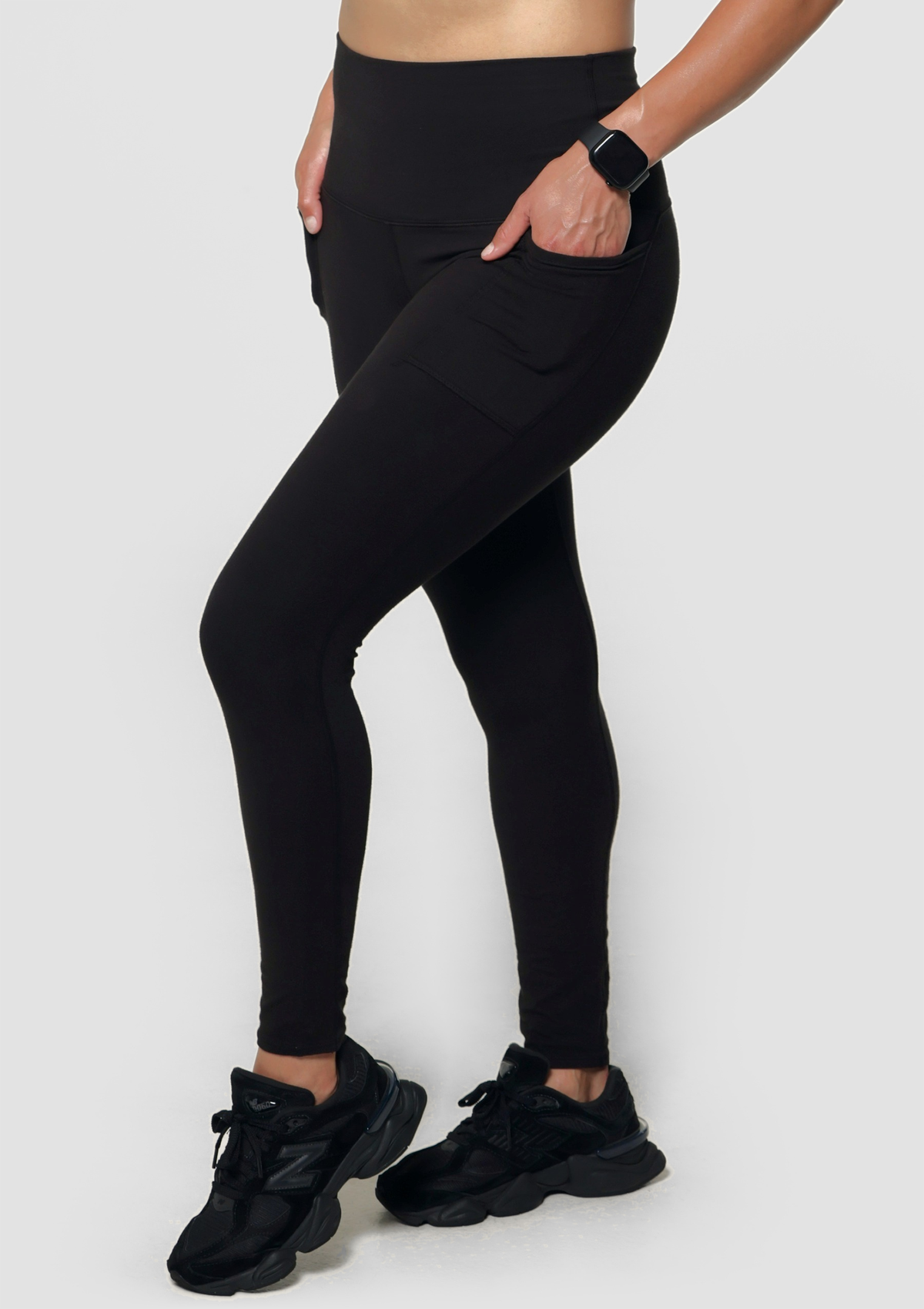
Compare the High Waist Leggings with the High Waist Pocket Leggings first. Our two best-selling choices are the PureFlex Organic Cotton High Waist Leggings, followed by the PureFlex Organic Cotton High Waist Pocket Leggings. Both use 92% GOTS-certified organic cotton and 8% spandex. The pocket version adds deep side storage for a phone. The broader women's organic cotton activewear collection includes fitted tops and sports bras for gym sets.
We design, cut, sew, and finish every garment in our own Los Angeles facility. Los Angeles partners knit the fabric and handle garment dyeing, so every production step stays local. PuraKai is a father-and-daughter founded small business with no venture capital or private equity. Our organic cotton leggings fabric is PFAS-free: Applied Technical Services independently tested it and found no PFAS detected, measuring total fluorine at below 2 parts per million against a current industry threshold of 100 ppm (ATS report 435623, October 2024). Mamavation's September 2026 activewear study found non-detect total fluorine in our leggings. The full lab report identifies the tested sample, method, result, and limits.
Frequently Asked Questions
Can you wear cotton leggings to the gym?
Yes. Cotton-majority leggings are well suited to lifting, walking, mobility, Pilates, and many moderate sessions when they offer enough stretch, opacity, and waistband stability. For long or very sweaty workouts, expect slower drying and bring a change of clothes.
Are cotton gym leggings good for squats?
They can be. Test opacity at full stretch, make sure the waistband stays stable, and check that the seams do not rub. A cotton-majority blend with spandex usually offers better recovery than 100% cotton for repeated squats.
What fabric blend should organic cotton gym leggings use?
There is no single required ratio. The blend must match the fabric construction and intended support. PuraKai uses 92% GOTS-certified organic cotton with 8% spandex to balance high organic cotton content with stretch and shape recovery.

Leave a comment
This site is protected by hCaptcha and the hCaptcha Privacy Policy and Terms of Service apply.